Length-Retention Hair Serum OEM: Build a Testable Product Brief
Build a length-retention hair serum OEM brief with a clear target user, routine, test plan and approval gates before committing to a production order.
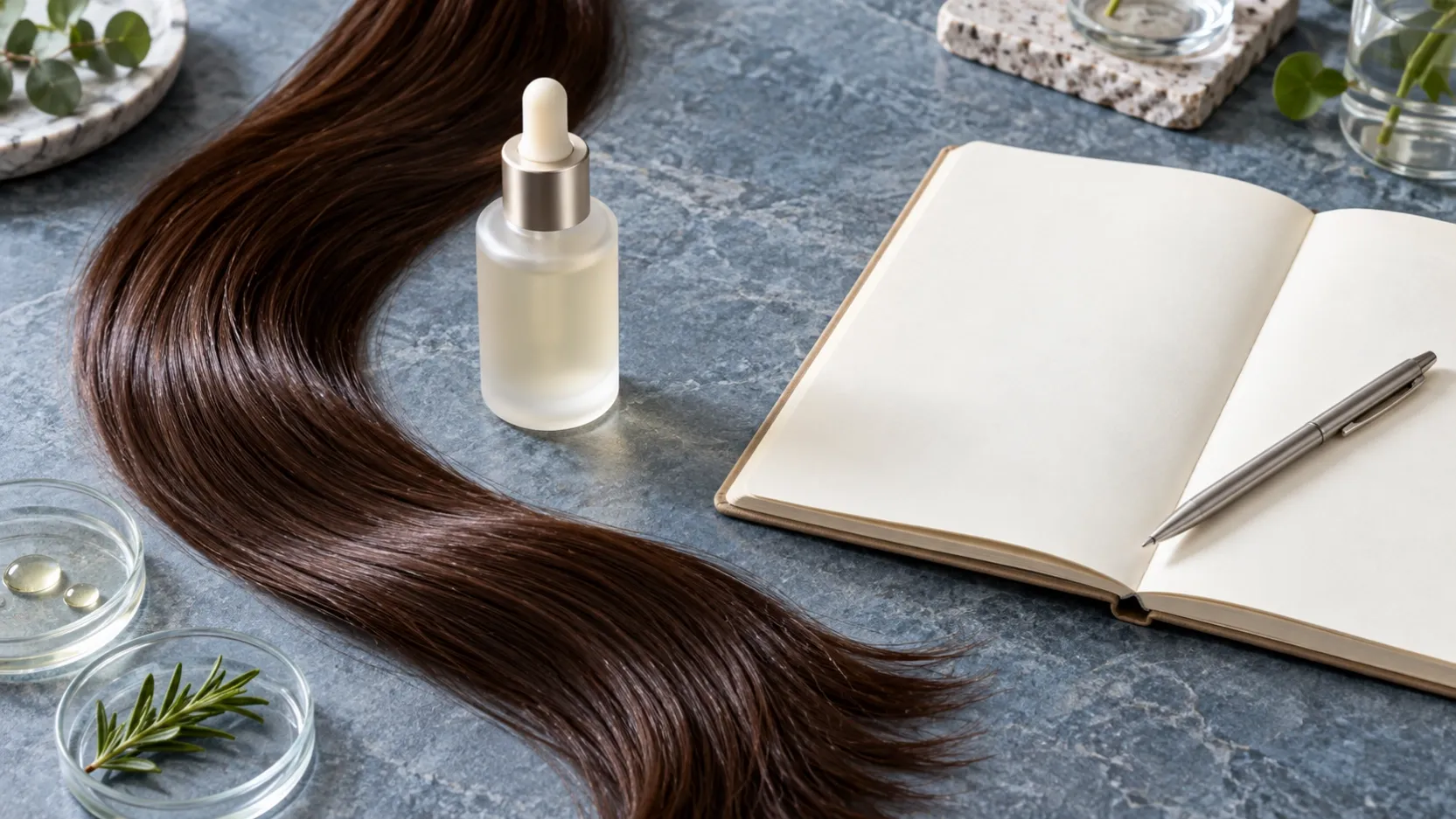
Start a length-retention serum project with a defined strand-care use case, a measurable performance objective and a staged approval plan. Choose the formula and pack after those decisions, and keep visible length, breakage and hair growth as separate claims.
What is the current opportunity signal?
Nutrafol announced a strand-focused serum on September 30, 2026. Its arrival supports reviewing the role of leave-in treatment for hair lengths, but does not demonstrate demand for a particular private-label formula. Source: official announcement.
Our sourcing judgment: a buyer should respond with a narrow brief rather than a long ingredient wish list. The goal is to learn whether the product earns a repeatable place in the intended routine.
Define the buyer and the consumer separately
The distributor needs a workable margin, reliable supply and a simple selling explanation. The end user needs practical directions and an acceptable finish. Record both sets of requirements so a technical success does not hide a commercial weakness.
Specify the target hair group, treatment history, styling habits and application area. A salon product for frequent blow-drying may require a different assessment than an everyday retail leave-in. Do not automatically combine those use cases.
An editable brief structure
| Field | What to specify |
|---|---|
| Consumer need | One primary problem on the hair lengths |
| Intended routine | Damp or dry use, dose and frequency |
| Comparator | Existing serum or current care routine |
| Primary outcome | A defined endpoint with a suitable method |
| Usability | Distribution, finish and application effort |
| Commercial limits | Pack cost, order quantity and target channel |
The values belong to the project. This table is a procurement template, not a performance specification already achieved by Junchun.
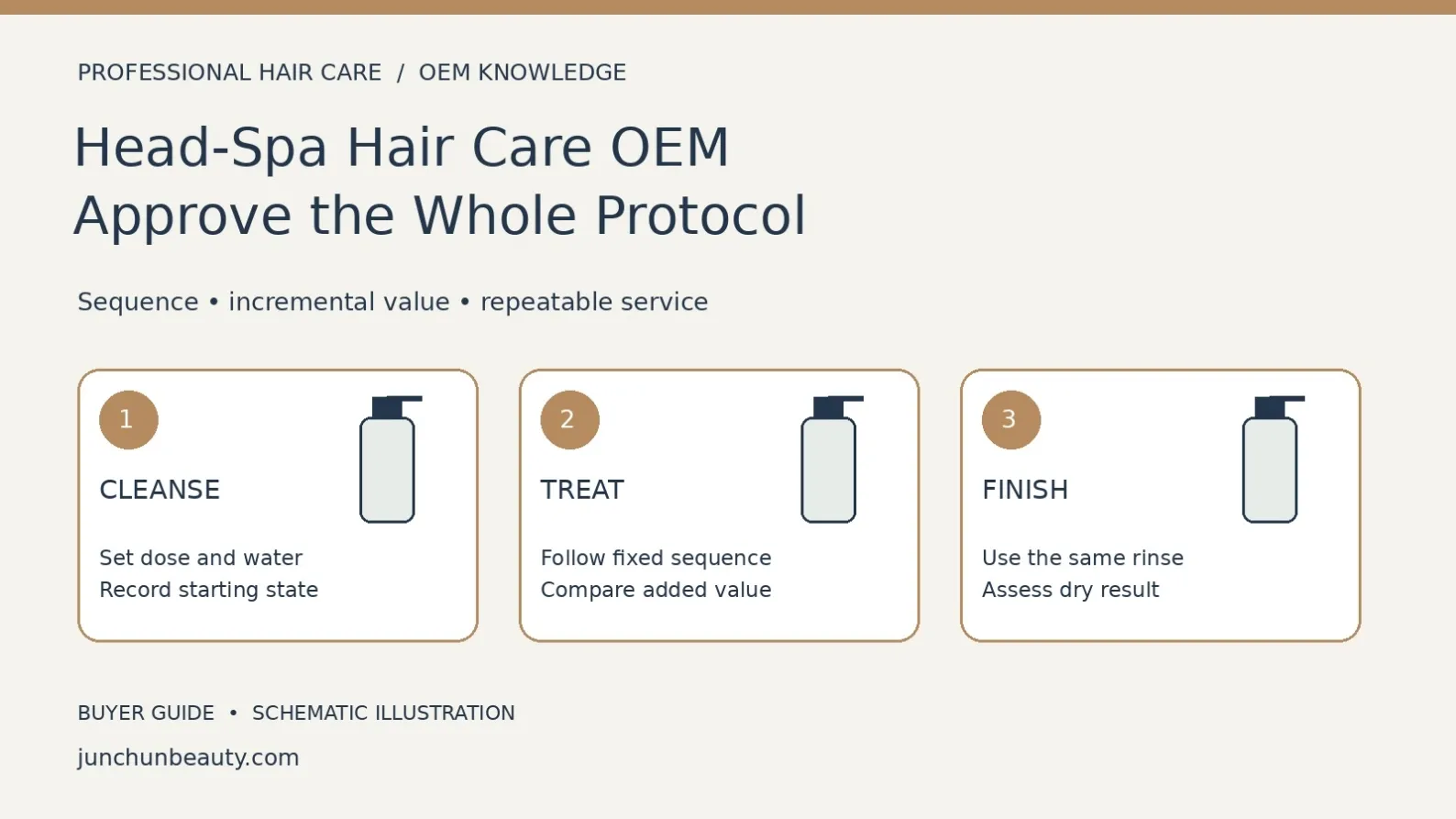
Use three approval gates
Gate 1: concept feasibility
Ask the development team to propose a formula direction, evidence plan and packaging route. Compare a stock-based option with custom development where suitable. Confirm which requirements drive cost or lead time before selecting ingredients for marketing copy.
Do not assume a two-phase format, branded technology or patent-related description can be copied. State the functional need and request an independent development proposal.
Gate 2: sample and filled-pack assessment
Compare samples under one agreed routine. Keep the primary performance endpoint separate from sensory preference. Assess the intended dose using the actual dispenser, including application and use near empty.
If the performance target is breakage, ask how the test distinguishes fragments and defines the comparator. If the claim concerns visible length over time, a short tress screen alone does not answer that question. The provider should justify the study duration and design.
Gate 3: production readiness
Approve the formula version, component list, directions, artwork wording and evidence references together. Confirm the applicable stability, safety, compatibility and quality work with the team. These are product-development requirements, not website maintenance tasks.
If a material substitution changes the supplied product, review the relevant approval instead of treating an old sample result as automatically current.
Reserve budget for the learning stage
Ask for an itemized quote covering formula work, samples, packaging, testing and production. A low initial component price can be less useful than a pack that dispenses the intended amount consistently.
Agree a decision date and a fallback route. If an additional leave-in duplicates an existing conditioner or mask without a worthwhile advantage, improving the current routine may be the better commercial outcome. A disciplined pilot can end with a no-go decision and still protect the budget.
FAQ
Can length retention be described as faster hair growth?
No. They are different outcomes. Keep the intended cosmetic strand-care benefit and its supporting evidence clear.
Must the first order use a custom formula?
No. Compare available development routes against the brief. Confirm feasibility and exact commercial terms for the chosen option.
Is a pleasant sample enough to approve production?
No. It is one input. The final formula, filled pack, directions and required evidence need coordinated approval.
Related capabilities and Contact
Review the leave-in bond-serum concept and molecular repair-mask concept to compare leave-in and rinse-off routes. Their names do not establish the proposed claim.
Contact Junchun Beauty with the target market, consumer group, current benchmark, intended routine, quantity and claim objective. Request a project-specific feasibility proposal and staged quote.