Body Mist and Cream OEM: Match the Scent Across Two Different Bases
Develop a body mist and cream OEM duo with separate fragrance trials, dry-down comparisons, stability checks and final-pack compatibility review.
Direct answer
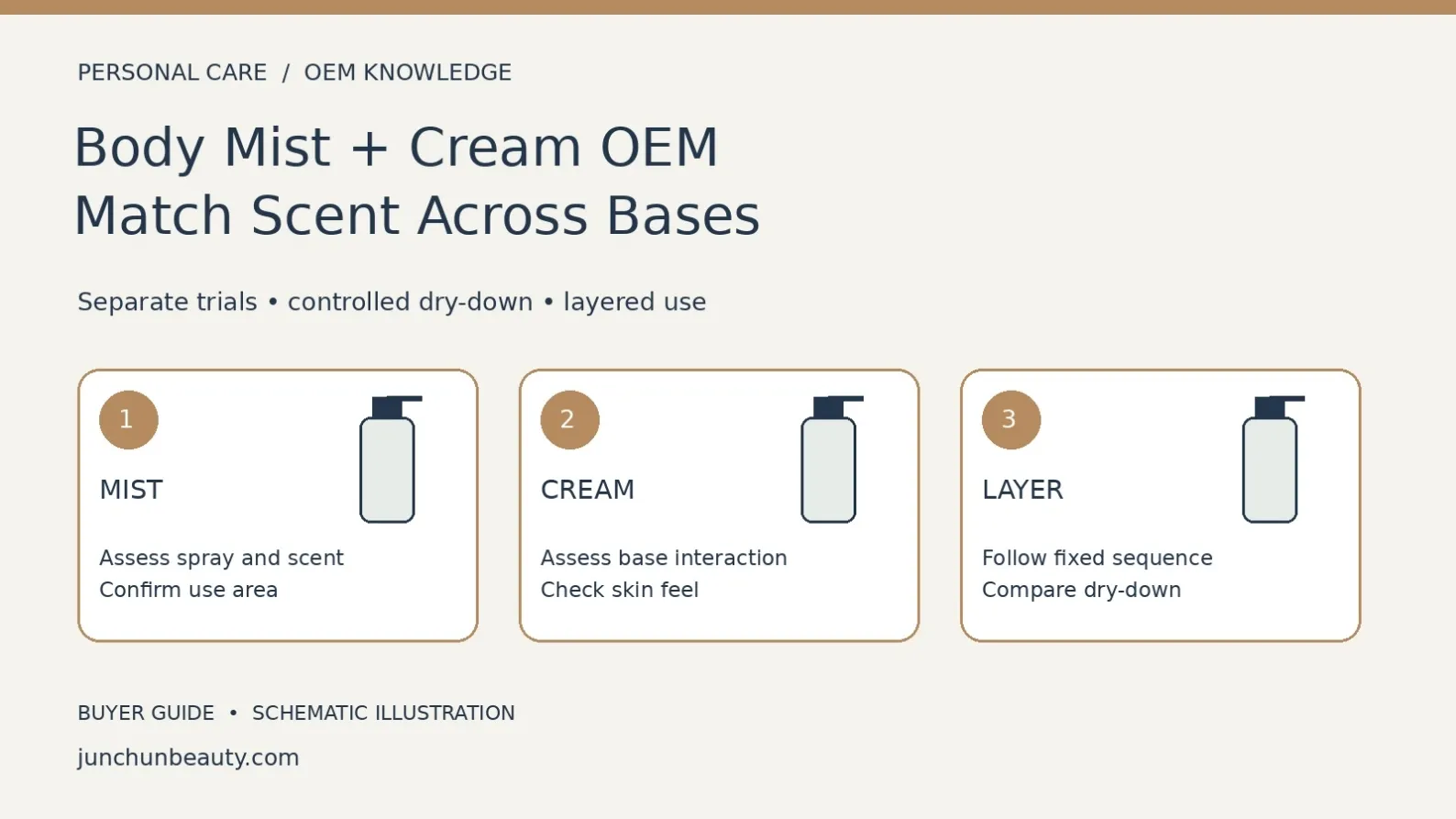
Match a body mist and cream through separate fragrance trials in each finished base, then compare the approved products when layered. Do not assume an identical fragrance dosage creates an identical scent. Agree the shared scent identity, acceptable differences, use sequence and testing scope. Approve stability, safety documentation and final packaging independently for both products.
A recent body-care signal
On 5 October 2026, Byrdie reported e.l.f.'s October 4 body-fragrance launch involving mist, cream and a travel kit. The brand's current travel-kit page, accessed 5 October, confirms the paired formats. Launch timing is taken from Byrdie's dated coverage, rather than inferred from an undated product page.
This is a product-launch signal, not proof of category growth. Our OEM inference is that a shared scent can organize a compact body-care extension, provided the bases still perform their individual jobs.
Define what “matching” means
Write a short scent brief with the main character, strength target, acceptable opening differences and desired dry-down. Include references without asking for a copy of a protected branded fragrance.
Decide whether both products should smell nearly identical or belong to the same family with deliberate differences. A restrained cream may support a more expressive mist; that is a positioning choice to test, not a rule.
Keep product performance in the brief
The mist needs a suitable spray, drying experience and intended application area. The cream needs spread, after-feel and the planned moisturizing performance. Fragrance preference should not obscure poor texture or dispensing.
A body mist does not automatically have approval for hair or facial application. If a hair-and-body direction is required, make it explicit in formulation, safety review, packaging and directions.
Use independent fragrance trials
| Sample stage | Mist question | Cream question |
|---|---|---|
| Initial trial | Is appearance and spray behavior acceptable? | Is texture and application acceptable? |
| Scent assessment | Is opening intensity suitable? | Does the base alter the intended scent impression? |
| Dry-down | Is the later character aligned? | Does the scent remain coherent after spreading? |
| Storage review | Does the finished pack retain agreed specifications? | Are odor, color and texture within agreed limits? |
Ask the fragrance supplier and laboratory to choose technically suitable candidates and levels. The table is a development plan, not evidence that any particular dosage is safe or stable.
Use coded samples and fixed amounts. Evaluate at defined time points and avoid comparing one product immediately with another long after application.
Assess layering without overloading the routine
Test the proposed sequence at realistic amounts. Record fragrance perception, tack, drying time and how comfortable the combination feels.
Do not simply increase both fragrance levels to force stronger performance. Review the intended experience and safety requirements for each product. Different bases and use quantities may require different approved concentrations.
Keep sensory preference separate from a durability claim. A small preference panel can guide selection, but it does not justify “all-day scent” or an exact number of hours.
Request the right fragrance information
Ask for the applicable ingredient and allergen information, supplier identity, relevant use-category documentation and other records required by the destination-market reviewer. Confirm that documentation covers the selected material and intended use.
Final label wording and safety decisions should be reviewed for the approved formula and target market. A supplier document is not a blanket approval for every concentration or application area.
Verify the final packages
For the mist, assess spray pattern, output, leakage and material compatibility. For the cream, check filling, dispensing or jar access, closure cleanliness and transport protection.
If a trial kit uses smaller components, evaluate those packs separately. Do not assume the full-size sprayer and mini sprayer deliver the same experience.
Keep the range extension commercially controlled
Compare the duo with a single-product launch by total component cost, test scope, carton size, fulfilment and inventory risk. Set a separate MOQ and reorder plan for each SKU.
Review the hair and body fragrance discovery set as a capability reference, and body-care product options for potential companions. Exact formulas, documents and quantities require project review.
Buyer FAQ
Should the mist and cream use the same fragrance percentage?
Not automatically. Approve each finished base and its intended use separately.
Does a matching scent prove longer-lasting fragrance?
No. Duration claims require a relevant finished-product assessment.
Can a body mist also be used on hair?
Only if the approved product and directions cover that application.
Can a travel kit use the full-size packaging test results?
Not without review. The mini components and their delivery behavior may differ.
Project discussion
Send your scent family, target market, use areas, mist and cream sizes, packaging references and quantities through Contact. Request separate formula trials and a coordinated sensory evaluation.