Fragrance-Led Body Wash OEM: Compare Scent During Washing and After Rinsing
Evaluate fragrance-led body wash OEM samples through dilution, washing and rinsing, separating scent preference from cleansing feel and supported claims.
Direct answer
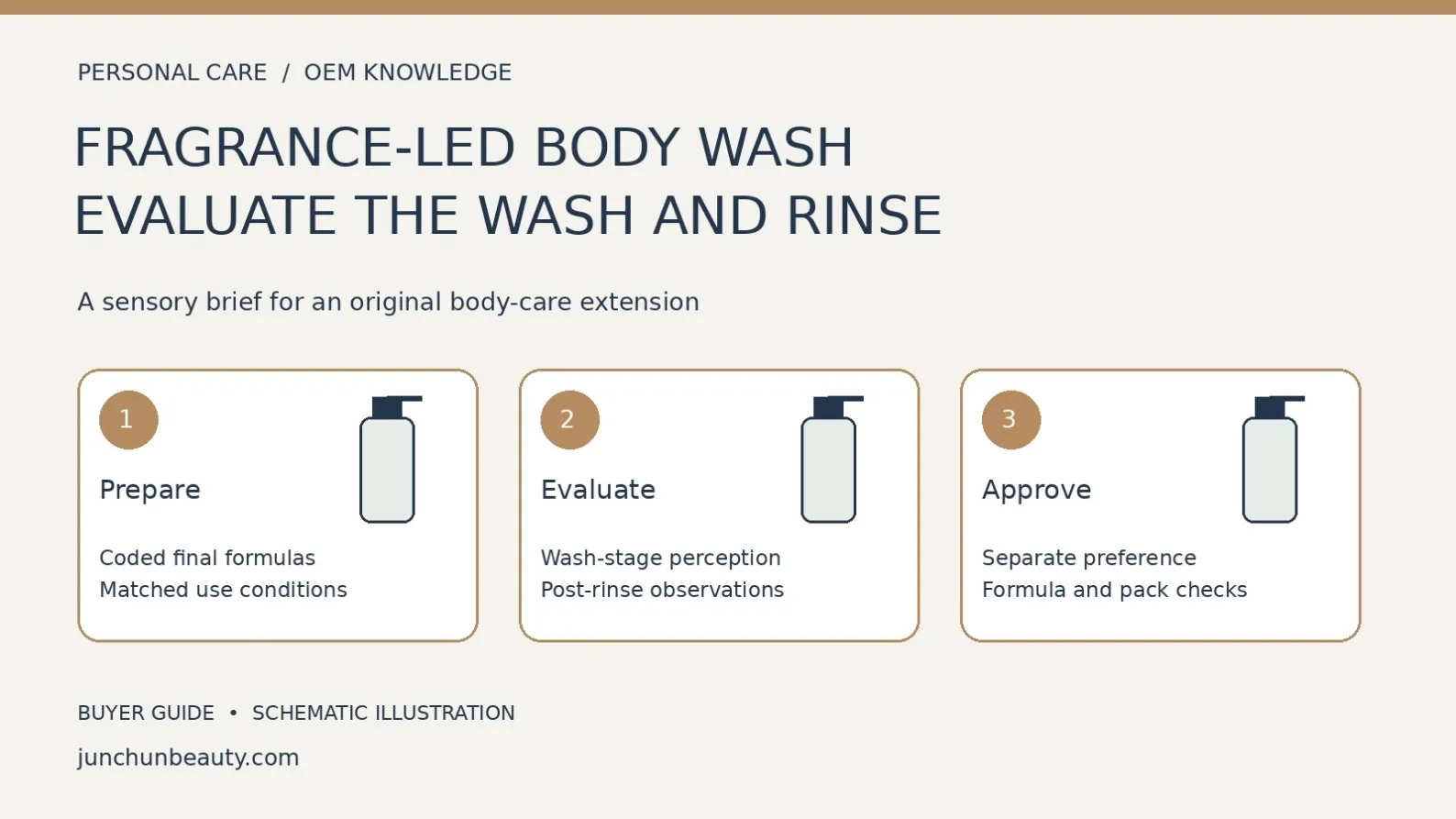
Evaluate fragrance-led body wash in its finished formula under the intended washing and rinsing routine, rather than approving scent only from the concentrate or bottle opening. Use coded samples and consistent dosing, then record scent perception separately from cleansing feel and preference. If fragrance persistence is part of the proposition, define a suitable post-rinse assessment before making a duration claim.
Current signals, with a clear boundary
Beautyworld Dubai's 3 October 2026 editorial discusses fragrance as personal expression and the influence of regional scent culture. Organizer article, checked 7 October. This is qualitative context; it does not establish the preferred body-wash scent for every Middle Eastern buyer.
A 5 October 2026 e.l.f. announcement describes a fragrance and body-care launch. Brand release, checked 7 October. It is evidence of one brand's category move, not measured demand for a new OEM body wash.
Our development inference: a body-wash extension should connect a recognizable scent idea with a practical wash experience. Original formula selection and careful evaluation are more useful than assuming that a popular perfume profile can simply be transferred into a cleansing base.
Agree the use conditions before discussing a winning scent
Specify the target market, customer routine, intended amount and rinsing approach. Ask whether the evaluation concerns daily shower use, a spa service or another defined application. Use suitable reviewed samples and consistent instructions.
Prepare samples in the final candidate bases with formula and fragrance codes. If several scent options use different bases, avoid ranking them as though fragrance is the only variable. Begin with a matched comparison, or document the reason that the bases differ.
A concentrate blotter can support initial creative selection, but it is not a finished-product washing result. A buyer should understand which stage of development each sample represents.
Break the experience into distinct observations
| Stage | Question | Keep separate from |
|---|---|---|
| Bottle opening | Is the initial scent acceptable? | The scent during washing |
| Dispensing and spreading | Is dose and handling practical? | Overall cleansing efficacy |
| Washing | What scent is perceived under the stated routine? | A promised duration on skin |
| Rinsing | How does the experience change as product is removed? | Preference for the original concentrate |
| Post-rinse | What is perceived at agreed observation times? | Universal or all-day fragrance claims |
Distinguish preference from a formula problem
A scent can be recognizable and technically suitable while being disliked by a specific buyer group. Conversely, people may like the creative direction but reject the finished wash experience. Record these separately so the supplier knows whether to review fragrance choice, formulation or directions.
Describe the observation rather than immediately assigning a mechanism. If users notice an unexpected scent change, supply sample code, handling history and the point in the routine at which it occurs. Ask the formulator to investigate. Do not conclude that more fragrance is the solution without reviewing the complete formula and intended use.
Keep acceptable scent development separate from claims about skin comfort or moisturizing duration. Each proposition needs evidence appropriate to what is being communicated. Stop evaluation for a user who reports a concerning reaction and escalate the issue through the agreed review process.
Compare at controlled doses and avoid visual bias
Use coded samples when evaluating product perception. Keep directions, application amount and relevant washing conditions comparable. Record who evaluates, which criteria they score and when. Where preference testing is part of the project, design it for the target customer rather than relying only on the buyer's personal taste.
A short internal screen can help shortlist samples. It should not be described as a clinical study or used to claim that a scent is preferred by a whole region. Agree with qualified evaluators what additional evidence is needed if a preference percentage or persistence claim is commercially important.
Recheck the final pack and linked product routine
Assess the approved formula in the proposed bottle and closure. Review dispensing, handling and leakage through an appropriate package programme. If the packaging or fragrance changes, ask whether previous observations remain relevant and what needs repeating.
For a coordinated wash and lotion range, test the intended sequence rather than assuming that the same fragrance name guarantees an identical experience. A lightweight body-lotion development option can be a related format, but formula and scent should be assessed in each base and in the actual routine.
Define the launch scope before quoting. Mature formula options, fragrance adjustments and custom development have different implications. Review OEM product categories, then retain the formula, scent code, pack reference, evidence and approved wording in one release file.
Buyer FAQ
Can I approve body-wash scent using only a concentrate blotter?
No. Assess the scent in the finished cleansing formula under the intended routine.
Does stronger bottle scent prove longer post-rinse fragrance?
No. Those are different observations and require different evaluation conditions.
Should one buyer's preference determine a regional claim?
No. A regional preference claim needs appropriate evidence from the relevant population.
Does matching the fragrance name make wash and lotion identical?
No. Evaluate each finished base and the combined routine.
Project discussion
Through Contact, send the target market, body-wash role, scent direction, reference routine, packaging, volume and proposed claims. Request coded finished-formula samples and an assessment scope that separates preference, wash experience and final product approval.