Scalp Shampoo OEM: When Oily and Dry-Feeling Scalps Need Separate Briefs
Decide whether scalp shampoo OEM needs one or two briefs by comparing root oiliness, post-wash comfort, hair handling and the economics of each SKU.
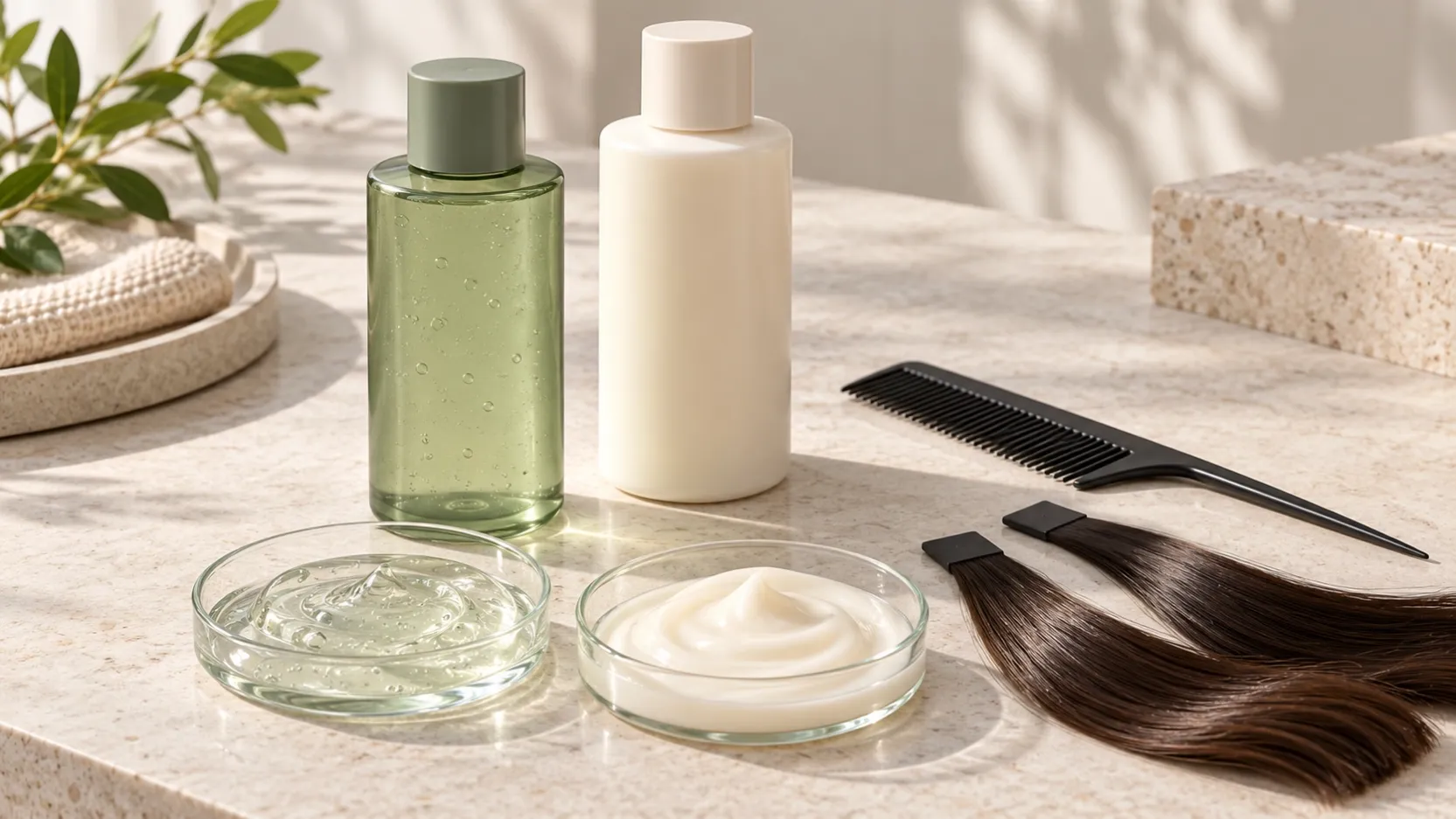
Use separate scalp-shampoo briefs when the intended audiences need different cleansing and post-wash sensory outcomes that one sample cannot satisfy. Validate those differences with customer screening and comparative testing before creating two SKUs. Ingredient themes alone do not justify the split.
A recent scalp-segmentation signal
Emami announced Kesh King Scalp First on 16 September 2026, with distinct oily- and dry-scalp ranges (official release, reviewed 3 October). The announcement shows a brand's segmentation strategy. It does not establish demand for the same segmentation in every export or salon market.
Buyer inference: scalp-specific briefs can make a range easier to explain when they reflect different customer experiences. Local acceptance and commercial volume remain unproven.
Ask customers about the routine, not only the label
Record wash frequency, current shampoo, styling use, root oiliness at a defined time and post-wash comfort. Keep hair-length condition separate from scalp feedback. A participant may want a refreshed root feel and better-conditioned lengths in the same routine.
For a cosmetic project, define sensory and appearance endpoints. Do not infer a medical diagnosis from a questionnaire or turn a “dry-feeling scalp” brief into an unsupported treatment claim.
Write two outcome statements
An oily-root brief might prioritize a refreshed, non-coated root feel after the evaluated wash routine. A dry-feeling-scalp brief might prioritize comfortable post-wash feel with acceptable cleansing and handling. These are example objectives, not prescribed formulas.
Give each brief a target audience, use frequency, benchmark, scent direction and pass/fail criteria. Let the formulator propose feasible systems; do not assume that changing one ingredient creates a different performance profile.
Compare whether one sample can satisfy both groups
Use coded samples and the same standardized application method. Evaluate each audience against its own relevant benchmark.
| Question | Oily-root brief | Dry-feeling-scalp brief |
|---|---|---|
| Main use outcome | Refreshed root appearance and feel | Comfortable post-wash scalp feel |
| Key rejection reason | Roots feel coated or heavy | Unacceptable tight or uncomfortable feel |
| Hair-length check | Handling without excessive weight | Handling within the intended conditioning routine |
| Follow-up | Root feel at defined intervals | Comfort and acceptance at defined intervals |
| Commercial gate | Enough customers for its order volume | Enough customers for its order volume |
This table is a proposed brief structure. It does not establish clinical efficacy or a universal classification method.
Keep the evaluated routine visible
If conditioner is part of the normal routine, define where and how it is used. Report shampoo-alone results separately from the full routine. Otherwise, a conditioner benefit may be attributed incorrectly to the shampoo.
Decide between one SKU and two
Choose one SKU when it meets both groups' acceptance criteria without a confusing compromise. Consider two when the groups consistently prefer different samples and each can support its own minimum quantity, packaging and replenishment plan.
Ask for the per-SKU quote and testing scope. Confirm stability, compatibility and the evidence needed for the final cosmetic claims. Do not duplicate claims across the two variants without checking what each formula actually supports.
FAQ
Do different scalp labels always require different shampoos?
No. Demonstrate a meaningful difference in desired outcomes and sample acceptance.
Can dry-feeling scalp be assessed by dry hair lengths alone?
No. Record scalp feedback and hair-length condition separately.
What justifies two SKUs commercially?
Distinct customer needs, repeatable preference for different samples and sufficient volume for each variant.
Relevant products and contact
Review the hair-care product range and niacinamide scalp serum for an adjacent scalp-routine route. A leave-on serum is a separate use step, not a substitute for shampoo testing.
Contact Junchun Beauty with your customer profiles, current benchmarks, target market and estimated quantity per variant. Request a one-SKU-versus-two-SKU feasibility review.