Nov 1, 2026Buying Guides
Scalp Serum OEM: Separate Sensory Approval from Claim Evidence
Build a scalp-serum OEM evidence pack that separates sensory approval, filled-pack quality and claim substantiation before labels and production are approved.
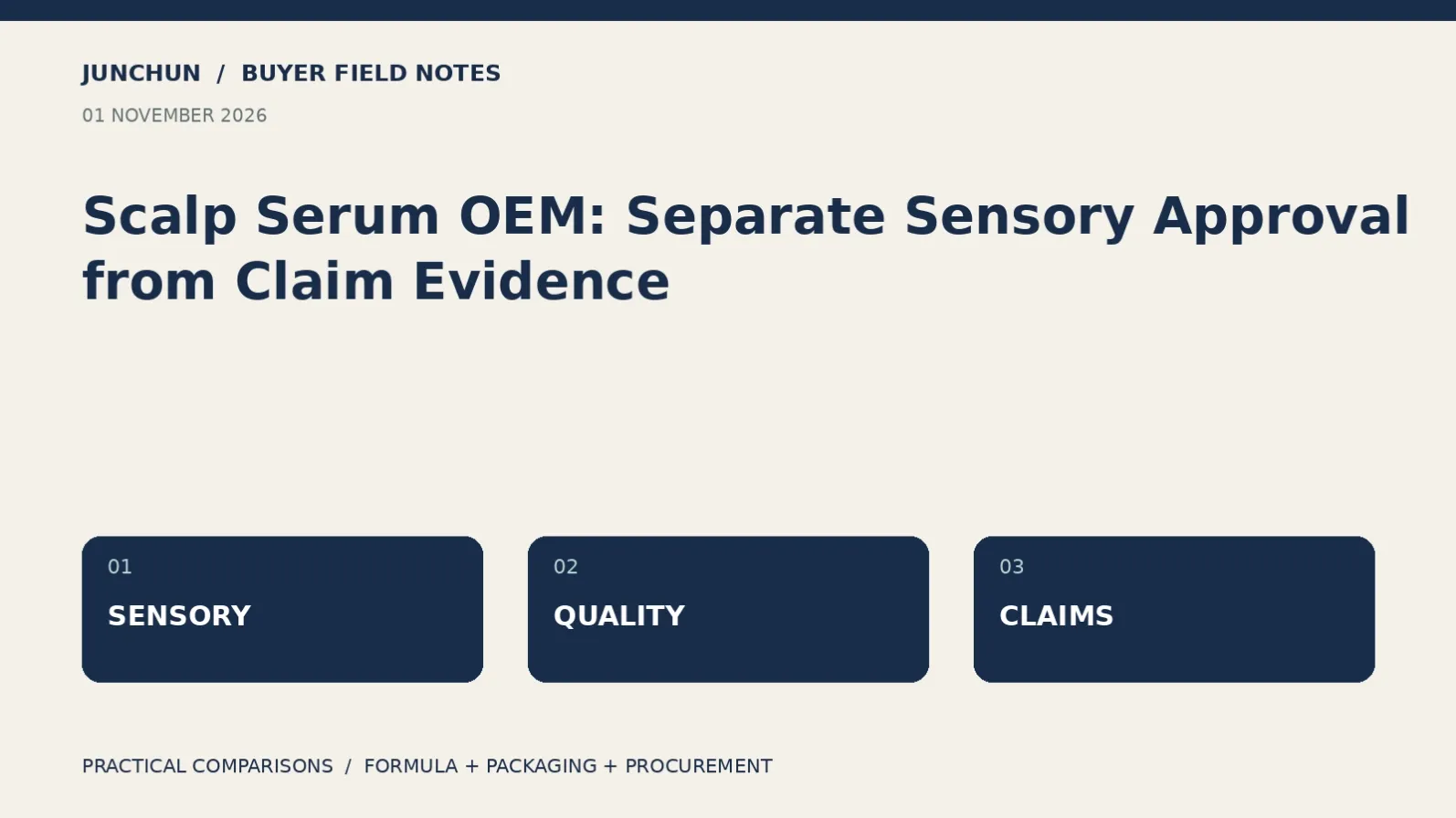
Approve scalp-serum feel, filled-pack quality and claim evidence as three separate workstreams. A non-greasy sample can pass a sensory comparison without proving hair growth, microbiome change or a timed barrier-repair benefit.
What the latest retail signal establishes
MOGAM’s 27 October announcement reports a number-one Amazon Hair Tonic New Releases position observed on 25 October. It supports interest in a water-based scalp format. It does not verify all scalp-serum claims, show the whole category’s sales or establish that another manufacturer’s formula performs identically.
Workstream one: sensory selection
Identify the sample code, intended customer, use conditions and applied amount. Compare spread, run-off, drying feel, visible root wetting and residue under the proposed routine. Record observations consistently. Do not call an informal comparison a clinical study or invite volunteers to test samples that have not cleared the appropriate safety review.
Workstream two: product and package quality
Match the sample with its final ingredient list, specification and selected components. Review preservation, microbial quality, stability and filled-pack compatibility through the project’s agreed testing plan. Compare actual dispensing and closure behavior; an attractive 60 ml dropper image does not identify delivered dose, bottle material or production stock.
Workstream three: the exact claim
Write the proposed wording before commissioning claim work. Softness, cosmetic scalp comfort, less visible flaking, hair-density appearance and hair-growth treatment are different endpoints and may follow different market routes. Ask what the finished-product study actually measured, which formula it used and whether the proposed label wording stays within the result. Ingredient papers are supporting context, not a transferable clinical result.
Make approval traceable
Keep a version-controlled record linking formula code, component, directions, artwork and evidence. If fragrance, preservative system or applicator changes, ask the appropriate technical team what must be reviewed again. JunChun can coordinate sampling, packaging and project requirements. Eligible mature stock-pack routes may start at 100 pieces; packaging changes are reviewed from 500, subject to actual process minimums.
Frequently asked questions
Can ingredient research prove the finished serum works?
It can support a rationale but does not automatically substantiate the finished formula’s claim.
Is sensory approval the same as safety approval?
No. They answer different questions and require separate review.
Can a low MOQ remove testing requirements?
No. Quantity does not remove the applicable product and market obligations.
Related product and OEM support
Niacinamide scalp serum: current project: https://www.junchunbeauty.com/products/private-label-niacinamide-scalp-serum
Request a focused sample review
Send the exact proposed claim, destination market, routine, sample reference and applicator. Request an evidence-gap review tied to the selected formula and pack.
Contact JunChun: https://www.junchunbeauty.com/contact-us · info@junchunbeauty.com: mailto:info@junchunbeauty.com
Sources and evidence limits
MOGAM release, 27 October 2026; ranking snapshot 25 October: https://finance.yahoo.com/media-advertising/articles/korean-scalp-care-dry-itchy-123900294.html
Brand launches are evidence of product positioning, not independent proof of sales or transferable efficacy. Sample procedures above are proposed procurement comparisons, not completed JunChun test results.