Sep 21, 2026Buying Guides
Rinse-Off Active Body Care: Contact Time, pH & Surfactant Reality
What BHA, peptides and barrier-support ingredients can realistically do in a body wash—and how buyers should test pH, mildness, rinse feel and claims.
DIRECT ANSWER
Active body wash can borrow useful ideas from facial skincare, but it cannot be evaluated like a leave-on serum. Short contact time, dilution with water, rinsing and the surfactant system limit how much an ingredient can contribute. For an OEM buyer, the most important questions are whether the cleanser is mild, whether its pH and active system are compatible, how it feels after rinsing and whether the proposed claims match finished-product evidence.
BHA, peptides, niacinamide and barrier-support ingredients can strengthen the product concept. They should not distract from cleansing performance, preservation, stability or realistic cosmetic wording.
WHY BODY CARE IS ADOPTING FACIAL-SKINCARE LANGUAGE
Consumers now recognize ingredients such as salicylic acid, niacinamide, ceramides and peptides from facial care. Using that vocabulary in body cleansing can help shoppers navigate concerns such as rough texture, blemish-prone areas, dryness and dullness.
The opportunity is strongest when the ingredient story fits a visible routine. A clarifying wash, smoothing wash or comfort wash is easier to understand than a bottle carrying six actives with no clear priority.
THE CONTACT-TIME LIMIT
A body wash is commonly massaged for seconds and rinsed. During use it is diluted, mixed with soil and exposed to varying water hardness. This does not mean rinse-off actives are useless; it means the buyer should demand claims suited to the format.
Immediate cleansing, smoother after-feel, reduced tightness and improved appearance after regular use can be evaluated. Claims implying deep remodeling or leave-on-level delivery require much stronger evidence and may be inappropriate for a cosmetic cleanser.
PH IS A FORMULA DECISION, NOT A MARKETING NUMBER
pH influences active compatibility, surfactant behavior, preservative efficacy, viscosity and skin feel. A lower number is not automatically better. For example, an acid-led concept must keep the acid in a useful form while remaining comfortable and stable in the full formula.
Ask for the target pH range, not a single laboratory reading. Review how pH changes during stability and after fragrance, color or botanical additions. The specification should define an acceptable range through shelf life.
SURFACTANTS CONTROL THE REAL AFTER-FEEL
The surfactant blend usually determines more of the consumer experience than a headline active. Anionic, amphoteric and nonionic surfactants can be combined to balance foam, cleansing, mildness and viscosity. Refatting agents, polymers and emollients may reduce squeaky after-feel but can also suppress foam or leave residue.
Evaluate lather speed, foam density, rinse time, slipperiness, tightness after drying and performance in hard water. A mild claim should be supported by more than the absence of sulfate terminology.
ACTIVE DIRECTIONS AND REALISTIC ROLES
BHA FOR ROUGH OR CONGESTED-FEELING SKIN
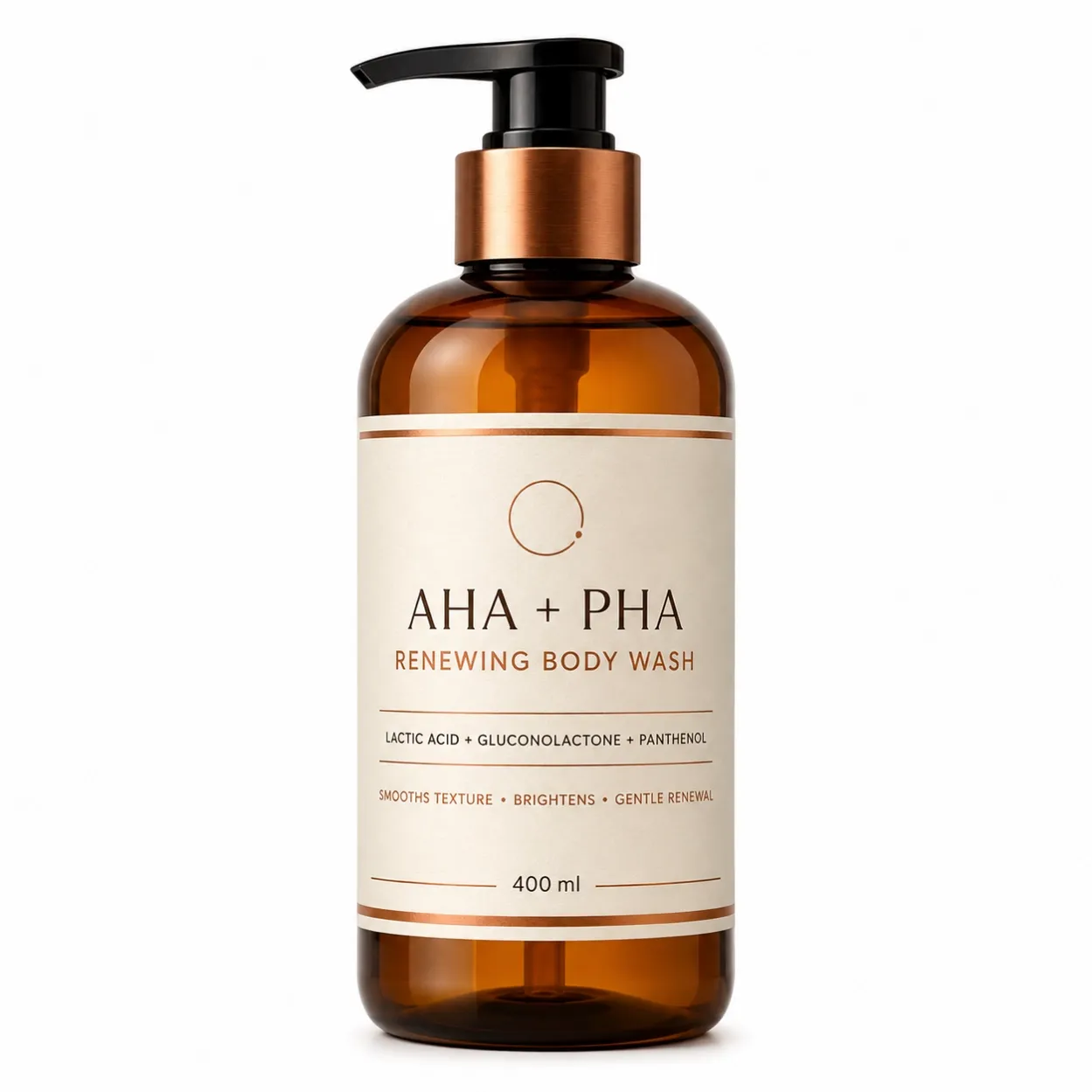
Salicylic-acid-led washes can target rough-feeling or blemish-prone body areas, but concentration, pH, regional rules and use instructions matter. The product should be tested for tolerance and stability, and the claim should describe cosmetic appearance unless the market and regulatory pathway support more.
PEPTIDES AS A PREMIUM SUPPORTING STORY
Peptides can add a premium skincare cue, but short contact time makes them better as a supporting story than the sole performance engine of a rinse-off product. Ask for supplier documentation, formula compatibility and a rationale for the selected use level.
NIACINAMIDE AND HUMECTANTS FOR EVERYDAY CARE
Niacinamide, glycerin, betaine, panthenol and similar materials can support a comfort or conditioning narrative. Their value still depends on the total cleansing system. A harsh surfactant base cannot be repaired simply by adding a small amount of a familiar active.
WHY SERUM TEXTURE STILL MATTERS
A translucent, cushiony gel can signal premium care and improve spreading, even though texture does not prove active delivery. Viscosity should remain stable across temperature changes and packaging use. Test whether the product dispenses cleanly, lathers at realistic doses and rinses without a persistent film.
WHAT BUYERS SHOULD TEST
Run accelerated and real-time stability, packaging compatibility and microbiological testing. Add use tests for lather, rinse, post-wash tightness, smoothness, fragrance persistence and tolerance. If the formula targets blemish-prone or very dry users, recruit those users rather than relying on a general panel.
For acid or active claims, agree on the finished-product method before finalizing the label. Track pH and active content where relevant. Repeat-use assessment is more informative than a single wash for claims about roughness or comfort.
CLAIMS: WHAT IS DEFENSIBLE
Strong cosmetic wording may include cleanses without a stripped feel, helps improve the look of rough texture with regular use, leaves skin feeling smoother, or supports a comfortable skin feel. Claims such as treats acne, repairs eczema or rebuilds the skin barrier can cross into drug, medical or highly substantiated territory depending on the market.
Keep three evidence levels separate: supplier data on an ingredient, laboratory testing of the final product, and consumer-perception results. Do not write the strongest conclusion from the weakest evidence.
HOW THIS DIFFERS FROM A LEAVE-ON BODY SERUM
A leave-on product offers longer contact and can use a different active level, sensory profile and claim strategy. A smart product line may use the wash to cleanse and prepare the routine, then use a lotion or serum for targeted leave-on care. The two products should complement rather than duplicate each other's claims.
Buyers can compare available body-care formats at https://www.junchunbeauty.com/products and read the related positioning guide at https://www.junchunbeauty.com/posts/serum-body-wash-oem-bha-peptide-positioning. Send the target market, skin concern, pack size, order quantity and claim needs through https://www.junchunbeauty.com/contact.
FAQ
DOES SALICYLIC ACID WORK IN A BODY WASH?
It can support a smoothing or clarifying concept, but performance depends on concentration, pH, contact time, use frequency and the full formula. Claims should be tested on the finished product.
IS A LOW-PH BODY WASH ALWAYS MILDER?
No. Mildness depends on the surfactant blend, dose, fragrance, preservation, use pattern and individual skin response. pH is one design variable, not a complete mildness score.
ARE PEPTIDES WASTED IN RINSE-OFF PRODUCTS?
Not necessarily, but buyers should give them a realistic supporting role and evaluate whether the premium story justifies cost. A leave-on format may be more suitable for ambitious peptide claims.
WHAT SHOULD A BUYER PRIORITIZE IN SAMPLE APPROVAL?
Prioritize cleansing, rinse feel, tolerance, pH stability, packaging function and claim evidence. Ingredient-list appeal is secondary if the product feels harsh or unstable.
SOURCES
U.S. FDA Salicylic Acid OTC Acne Monograph information: https://www.accessdata.fda.gov/scripts/cdrh/cfdocs/cfcfr/cfrsearch.cfm?fr=333.310