Sep 5, 2026Buying Guides
Professional Chelating Treatment OEM: Beyond Hard-Water Shampoo for Mineral and Metal Buildup
An OEM buyer guide to chelating shampoos and salon treatments for hard-water and metal buildup, with formula architecture, testing, claims and aftercare.
Why Hard-Water Care Is Moving Beyond Clarifying Shampoo
Hard water can leave mineral residue on hair and affect feel, shine, manageability and color-service consistency. Consumer coverage in 2026 continues to compare shampoos for hard-water routines, while salons and distributors increasingly ask for a more complete pre-service and home-maintenance system. The OEM opportunity is to separate ordinary oil-and-styling-product cleansing from targeted mineral or metal management.
Clarifying, Chelating and Pre-Service Treatments Are Not Identical
Clarifying Shampoo
A clarifying shampoo is usually designed to remove sebum, styling polymers and general buildup through surfactant and cleansing architecture. It may improve freshness but does not automatically provide a meaningful chelating effect.
Chelating Shampoo
A chelating shampoo combines cleansing with ingredients selected to bind or help manage certain metal ions. The chelating system, pH, contact time and rinse conditions all matter. Ingredient inclusion should not be presented as proof of complete mineral removal without finished-product testing.
Professional Pre-Service Treatment
A concentrated gel, liquid or treatment step can be positioned for salon use before coloring, bleaching or repair services. It needs clear directions, controlled contact time and compatibility testing with the intended professional process.
Formula Architecture for an OEM Brief
Start by defining the water conditions and use occasion: weekly home wash, monthly reset or salon pre-service. Chelating options such as GLDA, EDTA salts, sodium phytate or other permitted agents may be evaluated with the cleansing base. The laboratory must balance deposition control with foam, scalp comfort, color-care positioning and the after-feel on lengths.
A professional liquid or gel may need a different pH and chelator level from a daily shampoo. Avoid simply increasing active level. Higher concentration can change viscosity, packaging compatibility, sensory feel and regulatory requirements.
Testing for Credible Claims
Useful testing can compare treated and untreated hair tresses exposed to a defined mineral solution. Depending on the target claim, the plan may include instrumental metal analysis, combing force, color measurement, gloss, tactile panel review and repeated-use assessment. For salon protocols, also check the next chemical service under controlled conditions.
Consumer-facing claims should stay proportional to evidence. Safer territories include helps remove buildup, leaves hair feeling cleaner, improves manageability after hard-water exposure, or prepares hair for the next care step. Do not imply medical detoxification.
Create a Three-Step Hard-Water System
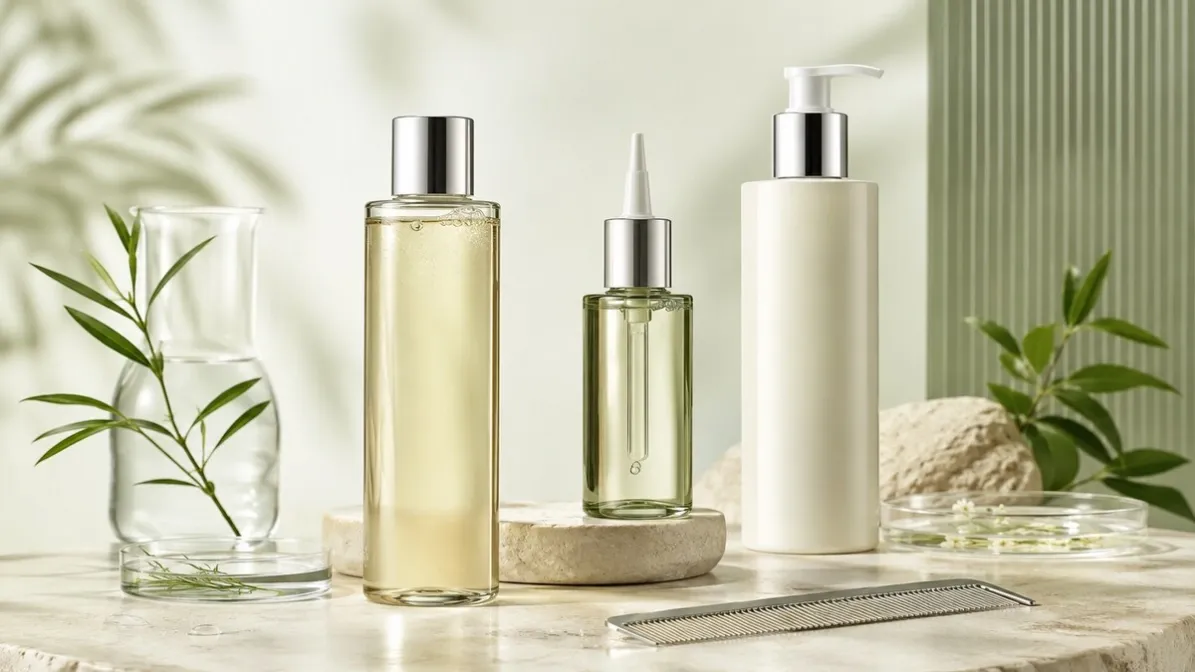
A practical line can include a weekly hard-water shampoo, a professional pre-service chelating step and an acidic or conditioning aftercare product. This structure gives salons a technical protocol and gives retail consumers a simpler maintenance product.
Relevant products for system planning:
Packaging, Instructions and MOQ
Shampoo commonly uses 250–500 ml bottles. A salon concentrate may use a measured nozzle bottle, single-service sachet or larger backbar pack depending on viscosity and dose control. Directions must state frequency, contact time, rinse steps and whether gloves or professional supervision are appropriate for the approved formula.
MOQ starts from 100 pcs per SKU for selected stable formulas using in-stock bottles. Custom formulas, colors, fragrances, and packaging are quoted based on project requirements. Professional concentrates and special packs are assessed according to the project.
Buyer FAQ
Is every sulfate-free shampoo suitable for hard water?
No. Sulfate-free describes part of the surfactant choice; it does not confirm chelating performance. Review the complete formula and test data.
Can a chelating treatment repair damaged hair?
Its primary job is buildup management. Pairing it with a conditioning, acidic or bond-care step can improve the overall routine, but each claim requires its own support.
How often should consumers use it?
Frequency depends on water hardness, styling habits, hair condition and formula strength. Weekly or periodic use is common positioning, but approved directions should follow testing.
What should a distributor include in the brief?
Send target market, water-condition concern, home or salon use, pack size, fragrance direction, expected quantity, benchmark and required claims. Contact: https://www.junchunbeauty.com/contact