Sep 7, 2026Buying Guides
Lightweight Rinse-Out Conditioner OEM: Strength and Slip Without Flat Hair
A buyer guide to lightweight rinse-out conditioner development, covering slip, strength without weight, testing, packaging, claims and OEM planning.
Fine, weak and easily flattened hair creates a difficult conditioner brief: buyers want softness, detangling and breakage support, but consumers reject formulas that leave the roots heavy or reduce volume. A lightweight rinse-out conditioner can solve this tension when the formula, use level, packaging and performance claims are developed as one system.
Why strength without weight is a strong 2026 hair-care direction
Current hair-care demand is moving beyond the old choice between rich repair and light cosmetic conditioning. Brands are looking for products that improve wet combing and manageability while preserving natural movement. This is especially relevant for fine hair, weak hair, frequent washers, humid markets and consumers who use styling products at the roots.
For an OEM project, the opportunity is not simply to make a thinner conditioner. Low viscosity does not automatically mean lightweight performance. The complete conditioning system must be designed to deposit enough slip on damaged areas without leaving excessive residue.
Build the formula around measurable performance
- Wet combing and detangling
The first job of a rinse-out conditioner is to reduce friction after shampooing. A good development brief should define the target hair type, shampoo partner and desired rinse feel. Damaged, bleached and textured hair may need more slip than untreated fine hair, so one formula may not serve every market equally well.
- Softness without coating
Lightweight emollients, controlled conditioning deposition and a balanced fatty-alcohol structure can support softness without a waxy after-feel. Ingredient selection must be confirmed by the final formula and INCI; the marketing copy should not promise silicone-free, protein repair or clean-beauty positioning unless the approved formula supports it.
- Strength and breakage-support claims
“Strengthening” should be linked to appropriate combing, tensile or breakage testing. Hydrolyzed proteins, amino-acid blends, panthenol or bond-care concepts may be considered, but the final claim depends on dosage, compatibility and test results. Responsible claims such as “helps reduce breakage caused by combing” are more defensible than medical or permanent-repair language.
- Volume retention
For fine-hair positioning, evaluate dry volume, root lift and residue after repeated use. The conditioner should be tested with the matching shampoo because cleanser mildness and polymer deposition can change the final result.
Rinse-out conditioner versus leave-in conditioner
A rinse-out conditioner is designed to deliver slip during the shower and leave controlled conditioning after rinsing. A leave-in conditioner remains on the hair and may add heat protection, styling support or longer-lasting frizz control. Many brands benefit from offering both formats with clearly separated use instructions rather than forcing one product to do everything.
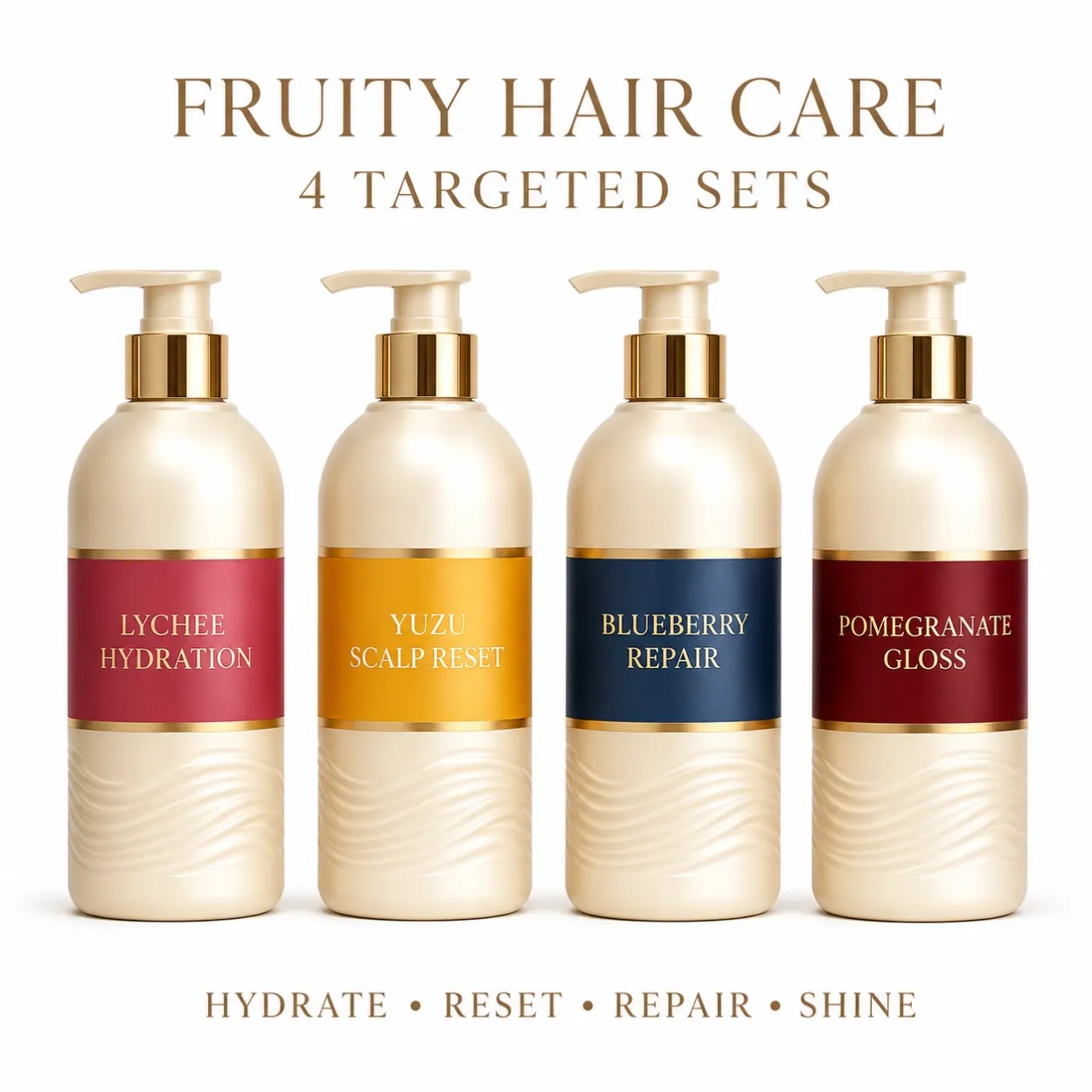
Explore Junchun Beauty's Multi-Benefit Leave-In Conditioner — https://www.junchunbeauty.com/products/private-label-multi-benefit-leave-in-conditioner as a companion SKU, or review the Fruity Hair Care Collection — https://www.junchunbeauty.com/products/private-label-fruity-hair-care-collection when planning a coordinated shampoo, rinse-out conditioner and mask range.
Packaging decisions for a lightweight conditioner
• Flip-top bottle: familiar for retail and suitable when viscosity allows controlled dispensing.
• Pump bottle: convenient for larger sizes, salon backbar and family use.
• Tube: useful for travel sizes or formulas that need more squeeze control.
• Stock packaging: can shorten development time when the bottle, closure and label area already fit the formula.
Compatibility testing should include formula flow, closure leakage, pump output and storage at relevant temperatures. A lightweight formula that dispenses poorly is still a weak customer experience.
What should buyers test before bulk production?
• Wet-combing force on the target hair type
• Dry softness, movement and root volume
• Residue after repeated shampoo-and-condition cycles
• Performance on color-treated or chemically treated hair
• Fragrance retention and rinse character
• Stability, microbiological safety and packaging compatibility
MOQ and OEM project planning
MOQ starts from 100 pcs per SKU for selected stable formulas using in-stock bottles. Custom formulas, colors, fragrances, and packaging are quoted based on project requirements.
For a faster evaluation, send the target market, hair type, bottle size, fragrance direction, expected claims and estimated order quantity. Junchun Beauty can then recommend whether a market-ready formula or custom development route is more suitable.
Buyer FAQ
Can a lightweight conditioner still work for damaged hair?
Yes, but the formula must balance slip and deposition. Testing on the intended damage level is necessary before selecting final claims.
Is a rinse-out conditioner the same as a hair mask?
No. A daily conditioner is usually designed for faster application and lighter deposition, while a mask typically targets richer treatment and longer contact time.
Can the formula be made silicone-free?
It may be possible, but this must be confirmed during formula selection. The conditioning system and claim language should match the approved INCI and performance tests.
Which size works best for private label?
Retail projects commonly use bottles or tubes, while salon projects may require larger pump formats. The best size depends on channel, price target and packaging availability.
How do I start a conditioner OEM project?
Contact our OEM/ODM team — https://www.junchunbeauty.com/contact-us with your market, target hair type, quantity, packaging preference and performance brief for a project review.