Oct 26, 2026Buying Guides
Hair-Care Product Data for AI Shopping: Build the OEM Evidence Brief
Create an OEM evidence brief for AI-assisted hair-care shopping with approved specifications, clear use cases, variant differences and concise buyer FAQs.
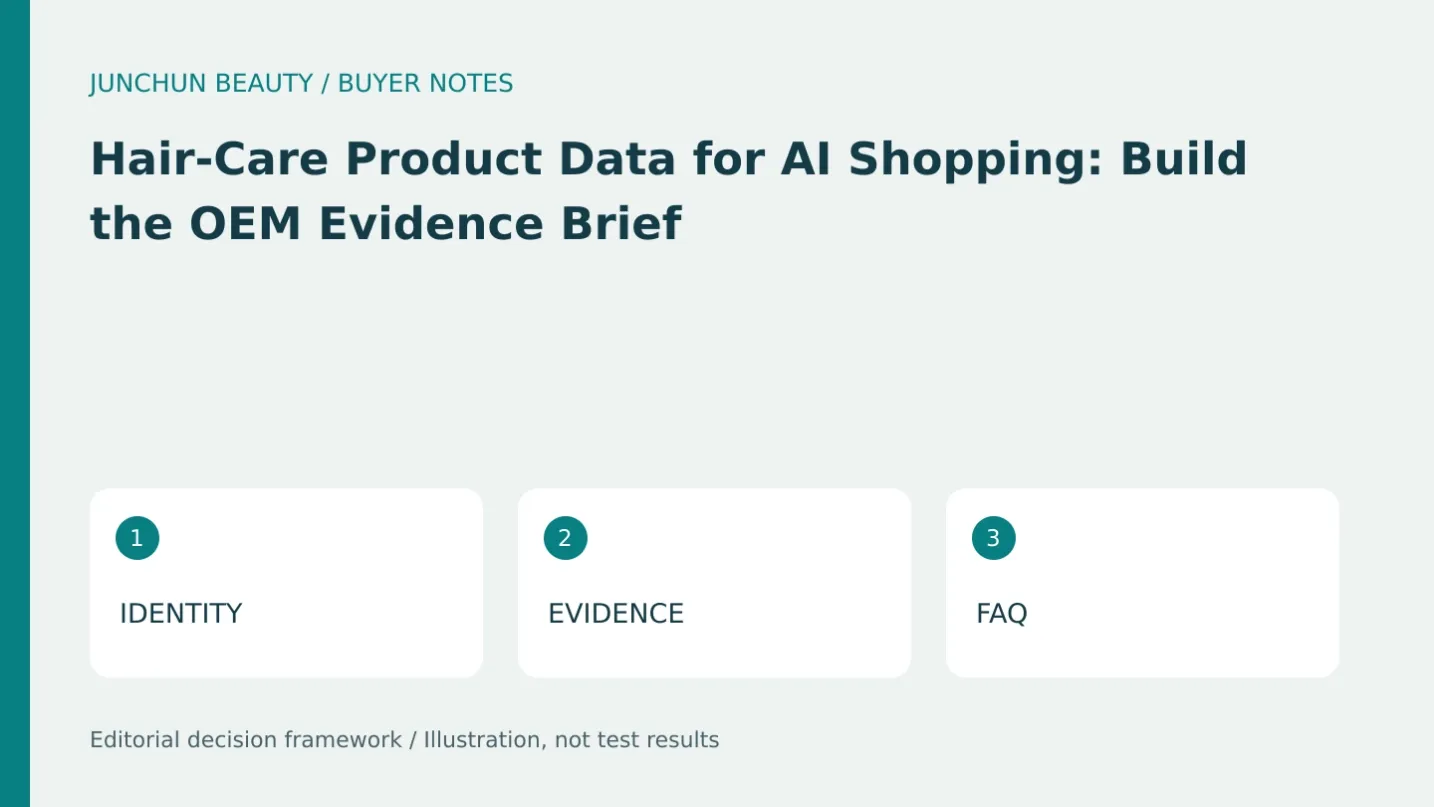
Build one approved product-data brief before writing marketplace or website copy. Connect each factual field and performance statement to the correct product version, document or test rather than relying on ingredient buzzwords.
Why the data brief matters now
Amazon's Holiday Beauty Event page, updated 19 October 2026, explicitly directs shoppers toward Alexa for Shopping. This confirms AI-assisted discovery is part of the retail experience; it does not prove any particular wording will trigger a recommendation. Buyers still need an accurate, internally consistent product description that a person can understand and verify.
Capture the identity fields first
List the SKU and revision, product type, routine step, intended hair types, net contents, pack type, directions, warnings and approved ingredient information. Separate available options from the purchased specification. A 200 ml cream and a fine-mist spray must not inherit the same application instructions simply because both are leave-in products. Match the label, carton and website to the approved master.
Map every claim to evidence
Use a working table with four columns: proposed wording, relevant formula version, supporting report and permitted use conditions. Treat sensory targets such as a light finish separately from measured performance such as combing-force change. Ingredient-supplier data can guide development, but it does not automatically substantiate a finished formula. Leave temperature, duration and numerical benefits out of the listing until the evidence supports the exact wording.
Write questions that help the buyer choose
Answer whether the product is rinse-off or leave-on, what hair type was evaluated, which package is shown and what changes require development. Make variant differences explicit. Replace generic best-for-everyone copy with a clear comparison of cream, mist and rinse-off roles. Use descriptive image alt text that explains the actual pack or test illustration without hiding claims in accessibility text.
Prepare a useful handover
Keep one dated brief shared across the product page, distributor sheet and sales team. Add a change-control field so a revised sprayer or formula triggers a review. The JunChun product portfolio provides starting routes for leave-in, scalp and rinse-off care; buyers should request the specification for the selected route. Measure qualified inquiries and product-page engagement after publication rather than treating AI visibility as guaranteed.
Buyer FAQ
Does this guarantee AI recommendations?
No. It improves information quality; platform selection and ranking are outside an OEM content brief.
Can variants share all the same text?
Only identical facts should be shared. State pack, formula and direction differences accurately.
What is the first document to request?
Ask for the selected SKU specification and the evidence available for the intended claims.
Related products and project review
Selected mature formulas with compatible in-stock packaging may start at 100 pcs per SKU. Packaging changes start at 500 pcs per SKU, subject to the actual component and process. Send your market, product requirement, quantity and packaging preference to info@junchunbeauty.com for samples and a project-specific quote.
Compare multi-benefit leave-in care: https://www.junchunbeauty.com/products/private-label-multi-benefit-leave-in-conditioner
Sources
Amazon; updated 19 October 2026: https://www.aboutamazon.com/news/retail/amazon-holiday-beauty-event-2026