Oct 26, 2026Buying Guides
Fine-Hair Anti-Frizz OEM: A Test Matrix for Smoothness and Volume
Evaluate fine-hair anti-frizz prototypes with dose control, humidity exposure, volume retention and repeat-use residue before approving an OEM formula.
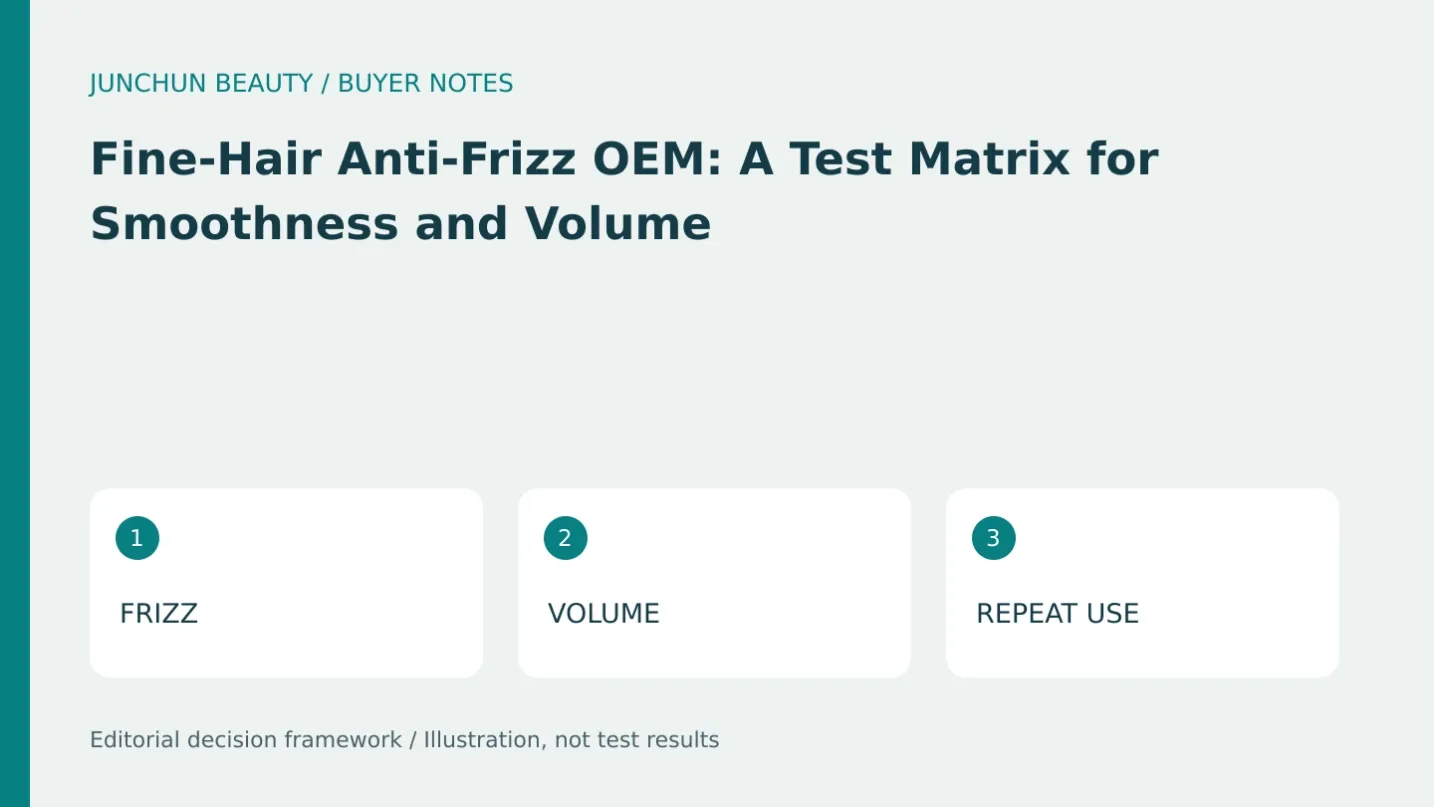
Approve smoothness and movement together. Use matched hair substrates, controlled dose and repeat-use assessment so a visually sleek result does not hide flattened volume or an impractical application routine.
Define the target before the chemistry
Specify fine straight, fine wavy or color-treated fine hair rather than combining all types into a single promise. Describe the routine: damp-hair blow-dry preparation, air-dry care or dry-hair finishing. These use conditions can change the appropriate format. Ask whether the benchmark wins because of actual performance, a lower dose or a particular styling method.
Use a screening matrix with separate endpoints
A proposed development screen compares untreated hair, the current reference and coded prototypes on matched tresses. Fix cleansing, applied mass, drying method and conditioning environment. Record frizz appearance, movement, combing and tactile residue separately. Use the same camera, position and lighting for images. Agree the humidity exposure and duration with the laboratory before the work begins; this article specifies no universal standard or passing threshold.
Repeat the real consumer routine
Evaluate the intended dose and a plausible higher-use condition. Reapply according to proposed directions, then assess residue and brushability. A prototype that performs once may behave differently after several styling cycles. Include the intended packaging: if output varies, the apparent formula difference may be a dosing difference. Request retained samples and record the formula and pack revision in the report.
Choose what to change
If dose reduction improves movement without losing combability, revise directions or delivery output and retest. If detangling drops before heaviness improves, the conditioning balance needs review. If anti-frizz performance only appears with a different styling routine, narrow the positioning or redesign the formula. Never label a cream as a spray solution without testing delivery feasibility.
Connect approval to a purchase decision
Use a signed acceptance sheet covering the selected formula, pack and evidence scope. JunChun's 200 ml heat-and-humidity care leave-in can be discussed as an existing route; the label name alone does not prove a temperature or humidity-duration claim. Ask for the applicable report and test conditions. Final approval should connect the buyer's actual complaint to an observed result, not to an increasingly long ingredient list.
Buyer FAQ
Is silicone-free automatically lighter?
No. Evaluate the complete formula and dose rather than one ingredient exclusion.
Can a tress screen prove all-day consumer performance?
No. Match the final claim to the actual method and population evaluated.
Which sample details matter most?
Formula revision, substrate, dose, package output and application conditions.
Related products and project review
Selected mature formulas with compatible in-stock packaging may start at 100 pcs per SKU. Packaging changes start at 500 pcs per SKU, subject to the actual component and process. Send your market, product requirement, quantity and packaging preference to info@junchunbeauty.com for samples and a project-specific quote.
200 ml heat-and-humidity care leave-in: https://www.junchunbeauty.com/products/private-label-heat-humidity-care-leave-in-200ml-oem
Multi-benefit leave-in conditioner: https://www.junchunbeauty.com/products/private-label-multi-benefit-leave-in-conditioner
Sources
Beauty Connect LA; supply-chain and profitability agenda checked 26 October 2026; test matrix is an editorial proposal: https://www.beautyconnectla.com/