Sep 4, 2026Material Notes
Dual-Layer Oil-in-Serum Face Mist OEM: Shake-to-Activate Skincare for 2026
A buyer-focused OEM guide to dual-layer oil-in-serum face mists, covering formula architecture, spray packaging, testing, claims, MOQ and global compliance.
A dual-layer oil-in-serum face mist is a shake-to-activate skincare format that combines the fast, even application of a water mist with the comfort and glow of a lightweight oil phase. For beauty brands, the opportunity is not simply to copy a viral spray: it is to engineer stable phase separation, reliable remixing, an ultra-fine spray pattern and claims that can be supported by finished-product testing.
Why Spray-Serum Formats Matter in 2026
Current Amazon face-mist rankings include serum-spray and glow-mist formats, while recent K-beauty shopping coverage continues to highlight dewy, portable, makeup-friendly sprays. This suggests buyers are responding to three visible benefits: convenience, sensorial transformation and an immediate cosmetic finish.
The OEM opportunity is strongest when the format solves a clear use case:
- fast hydration between skincare steps;
- a dewy finish without a heavy cream;
- travel, office, flight or post-makeup refresh;
- a visually distinctive shake-to-activate demonstration for Instagram, TikTok and short-form video;
- a premium line extension that sits between toner, serum and facial oil.
Market signal: review the current Amazon Best Sellers in Face Mists as a live category reference. Rankings and listings change, so formulation decisions should be based on the target consumer and channel rather than one short-lived bestseller.
What Is a Dual-Layer Oil-in-Serum Mist?
It is a deliberately biphasic formula. The water phase can carry humectants and water-soluble soothing ingredients. The oil phase can provide emollience, glow and a softer after-feel. Before use, the consumer shakes the bottle so the two phases temporarily disperse; the spray must then deliver a uniform, comfortable mist.
A good prototype should separate into two attractive layers at rest, remix quickly with normal shaking and return to a consistent appearance after use. The visual mechanism is useful for social content, but the real product must also perform reliably through the full pack life.
Recommended Formula Architecture
A brand can brief the factory around the following functions instead of prescribing an untested ingredient trend:
Water Phase
- glycerin, betaine or propanediol for humectancy;
- panthenol for skin-conditioning positioning;
- sodium hyaluronate for hydration support;
- ectoin, allantoin or suitable botanical extracts where compatible;
- chelating and buffering components to support stability.
Lightweight Oil Phase
- squalane, caprylic/capric triglyceride or other light emollients;
- meadowfoam, jojoba or selected antioxidant-rich oils at controlled levels;
- tocopherol as an antioxidant for the oil phase;
- oil-soluble fragrance only where the target market and sensitive-skin brief allow it.
The exact percentages, preservative system and ingredient order must be confirmed through laboratory development, packaging compatibility and finished-product stability. Claims such as non-comedogenic, hypoallergenic or clinically proven require appropriate evidence and should not be added automatically.
Four Technical Risks Buyers Should Check
1. Spray Pump Compatibility
A formula can feel elegant in the beaker but fail in the selected pump. Droplet size, clogging, leakage, output per stroke and spray-angle consistency must be checked with the final bottle and actuator.
2. Controlled Separation
The product should look intentionally biphasic, not unstable. R&D should define acceptable separation time, the number of shakes needed for remixing and whether color migration occurs during storage.
3. Preservation and Microbiological Safety
Because the formula contains a water phase, the preservation system must be validated. Challenge testing and microbiological specifications should be discussed according to the market, formula and project stage.
4. Makeup and Eye-Area Use
A fine mist can migrate. Directions, warnings and spray distance need to match the safety assessment. If the product is promoted for use over makeup or near the face, the spray pattern and tolerance should be evaluated on the finished pack.
Packaging Options for Premium Positioning
Clear or translucent bottles make the two-phase effect visible. PET, PETG, glass or other compatible materials can be evaluated, but appearance alone is not enough. The pack should also be checked for:
- oil and fragrance compatibility;
- pump gasket swelling;
- leakage during courier and air shipment;
- color stability under light;
- label adhesion on an oil-exposed bottle;
- consumer ability to shake and spray with one hand.
Typical retail sizes are 50–120 ml. A smaller discovery size can support sampling, while 80–100 ml often offers a practical balance of premium appearance and portability.
How to Position It Without Overclaiming
Strong cosmetic language includes:
- helps refresh and hydrate dry-feeling skin;
- leaves skin looking dewy and smooth;
- lightweight, non-sticky facial mist;
- shake-to-activate oil-and-serum care;
- suitable for use before or after makeup, subject to final testing.
Avoid claiming that the mist treats eczema, repairs a medical condition or produces clinical changes unless the final formula has the required evidence and market-specific regulatory review.
Market Adaptation for Europe, the Middle East and the United States
For Europe, ingredient compliance, CPSR, PIF and Responsible Person arrangements should be planned before artwork is finalized. Selected compliant products may support CPNP notification after the responsible regulatory process; CPNP is not a blanket factory certificate.
For the Middle East, buyers often request refined fragrance, premium packaging and heat-conscious transport testing. Fragrance-free and alcohol-free options can also be developed where suitable.
For the United States, cosmetic labeling and claims must remain within cosmetic scope. Junchun can provide applicable manufacturing and product documents; FDA registration should always be described as registration, never as product approval.
MOQ and Scale-Up Path
Junchun uses a tiered project model:
- selected mature formula plus stock packaging: some products from 100 pieces per SKU;
- professional-line mature formulas: generally from 500 pieces per SKU;
- custom formula, color, fragrance or special packaging: commonly 500–1,000 pieces or more;
- complex packaging or fully customized development: quoted after technical review.
The final MOQ depends on formula batch size, pump availability, decoration method and regulatory requirements. A practical path is to select the bottle first, test the formula in that package, approve the artwork and then confirm the production quotation.
OEM/ODM Support from Concept to Export
Guangzhou Junchun Cosmetic Limited supports hair care, skincare and body care development with 24 years of manufacturing experience and 28 production lines. Available credentials and project support include GMP, ISO 22716, FDA registration and HALAL certification. For eligible projects, the team can coordinate documentation for EU CPSR/PIF, selected CPNP notification and EU/UK Responsible Person requirements.
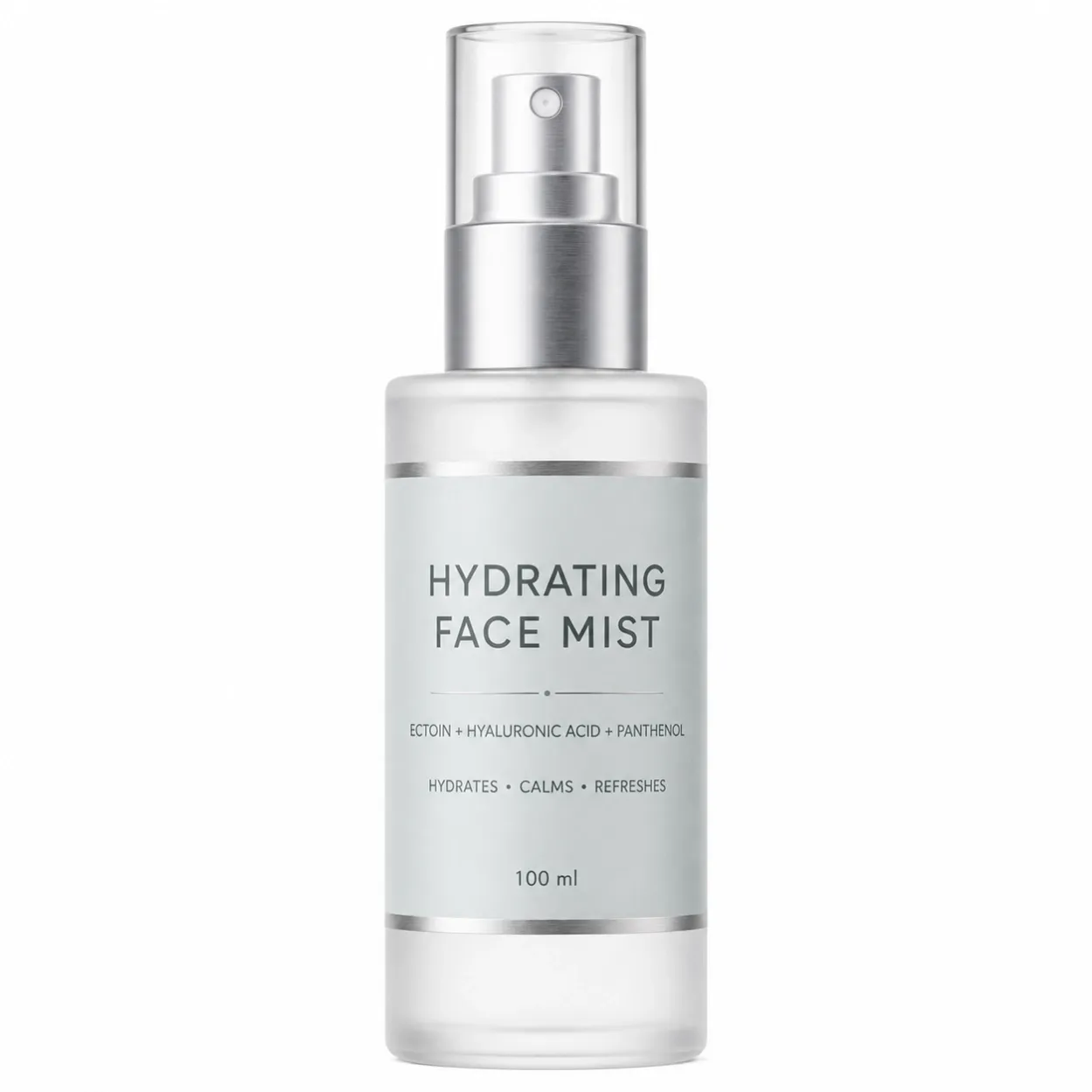
Brands can start by comparing this concept with our existing Private Label Hydrating Face Mist, review broader skincare manufacturing options, or request a formula and packaging discussion.
Buyer FAQ
Can the two layers remain permanently mixed?
A biphasic mist is designed to separate at rest. If a permanently uniform emulsion is required, it becomes a different formulation brief and may need a different spray system.
Can the product be alcohol-free?
Yes, an alcohol-free direction can be evaluated. The full preservation, sensorial and compatibility system still needs laboratory confirmation.
Can we add PDRN, peptides or ceramides?
These ingredients may be considered, but supplier specifications, solubility, stability, claim support and market compliance must be reviewed. Trend value alone is not sufficient.
What tests should be completed before bulk production?
At minimum, discuss stability, packaging compatibility, microbiological specifications and spray performance. Challenge testing, transport testing and additional claim substantiation may be required depending on the market and claims.
Is the 100-piece MOQ available for every customized mist?
No. Some mature formulas with stock packaging can start from 100 pieces per SKU. Customized bi-phase systems, colors, fragrances or special pumps generally require 500–1,000 pieces or more after technical review.
How do we request a quotation?
Send the target market, size, preferred bottle, fragrance direction, required claims, expected quantity and launch date through the OEM/ODM inquiry page. The factory can then confirm formula options, testing scope, MOQ and lead time.