Sep 4, 2026Buying Guides
From 100-Piece Market Test to 10,000-Unit Scale: A Cosmetics OEM Roadmap
A practical OEM roadmap showing when 100-piece mature-formula orders apply, when MOQ rises to 500–1,000+, and how hair, skin, body and salon lines scale.
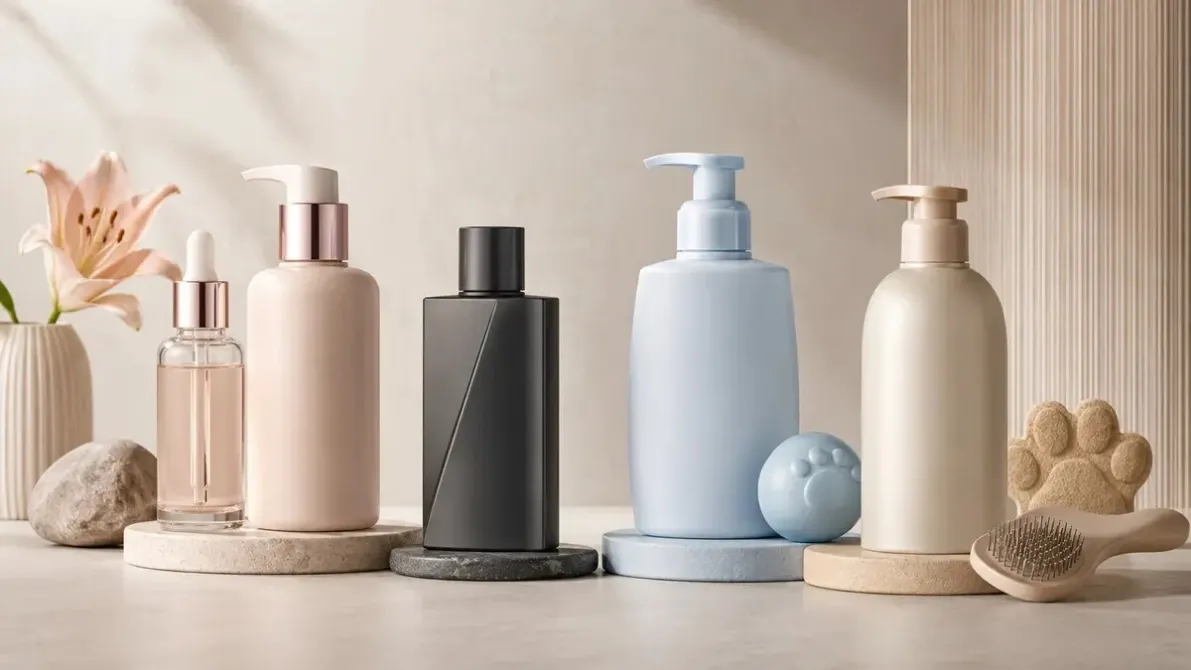
A reliable cosmetics OEM plan should connect the first market test to repeatable 1,000-, 5,000- and 10,000-unit production. Junchun supports selected mature formulas with stock packaging from 100 pieces per SKU, but that entry point is not the factory’s entire positioning. Professional salon products, custom formulas, colors and special packaging follow higher, technically realistic MOQs so brands can scale without changing the rules halfway through development.
Why Brands Need a Scale Roadmap
Recent beauty-manufacturing discussion on LinkedIn emphasizes strategy-led OEM/ODM, modular development and products designed to scale rather than one-season trend chasing. The idea is commercially sound: speed matters, but formula repeatability, component supply, regulatory planning and reorder consistency matter more after the first launch.
Industry perspective: Strategy-led ODM/OEM manufacturing and scalable innovation. Social posts are useful market signals, not independent proof of a factory’s claims; buyers should verify actual documents, samples and production terms.
Junchun’s Four-Level MOQ Structure
Level 1: Selected Mature Formula + Stock Packaging
Some products can start from 100 pieces per SKU when the project uses:
- an existing mature formula;
- an available stock bottle, jar, tube or closure;
- standard filling and a customized waterproof label;
- limited changes to fragrance, color or viscosity.
This route is useful for testing a sales channel or launching a focused collection. It is not available for every formula or package.
Level 2: Professional Salon Mature Formula
Professional bleach powder, keratin treatment, color correction, bond care and other salon products generally start from 500 pieces per SKU, depending on pack size, formula and component availability.
For bleach powder, current project guidance is:
- white or blue bleach powder: from 500 pieces;
- other powder colors such as pink or green: generally from 1,000 pieces.
Professional products require clear instructions, compatibility review and appropriate market documentation.
Level 3: Custom Formula, Color or Special Packaging
Projects involving a new formula, customized fragrance/color, special bottle color, screen printing, unique pump or upgraded secondary packaging commonly start from 500–1,000 pieces or more per SKU.
The final MOQ is driven by the largest technical constraint: raw-material batch, packaging supplier, decoration process, filling line or regulatory test quantity.
Level 4: Deep Professional Hair Color Projects
Customized professional permanent hair color follows a different production model:
- 20,000 tubes total;
- minimum 900 tubes per approved shade;
- final shade allocation confirmed after formula, packaging and color-chart planning.
This is not a low-MOQ project. The per-shade structure helps a distributor build a broader professional chart within a commercially viable total run.
Stage 1: Define the Commercial Brief
Before asking for a price, a buyer should define:
- target countries and sales channels;
- product category and core consumer problem;
- desired retail price and target EXW range;
- pack size and packaging style;
- initial quantity and 12-month forecast;
- required certifications and product documents;
- launch deadline;
- benchmark products and claims.
A clear brief reduces false quotations based on an undefined formula or unavailable package.
Stage 2: Choose Mature Formula or Custom Development
A mature formula offers faster sampling and lower development risk. The buyer can still select suitable packaging, fragrance direction and label identity within the available scope.
Custom development makes sense when the desired performance, texture, active system or regulatory target cannot be met by an existing base. It requires more time, testing and a higher MOQ.
The correct question is not “Which option is better?” It is “Which variables genuinely need to be unique for this brand?”
Stage 3: Sample the Exact Commercial Direction
The sample should represent the intended bulk formula as closely as possible. If the commercial product will use a specific pump, tube or dual-chamber pack, compatibility should be considered before approval.
Record:
- sample code and date;
- formula version;
- fragrance and color;
- viscosity and pH where relevant;
- application result;
- requested changes;
- approved reference sample.
Do not approve only from a photo or digital mockup. Formula and packaging are separate approvals.
Stage 4: Lock Packaging and Artwork
Stock packaging can reduce MOQ and lead time. Custom decoration improves shelf impact but adds supply-chain dependencies.
Confirm:
- bottle or tube material;
- closure and pump output;
- fill volume and headspace;
- label size or print area;
- leak and transport performance;
- carton configuration;
- barcode, batch and expiry location;
- mandatory ingredients, warnings and responsible-party information.
Artwork should not be printed before the final formula, INCI and target-market labeling review.
Stage 5: Complete Testing and Documents
The test program depends on product, claims and destination. It may include:
- stability and packaging compatibility;
- microbiological specifications and challenge testing;
- COA and product specification;
- SDS/MSDS where applicable;
- claim substantiation or tress testing;
- CPSR/PIF and Responsible Person coordination for EU/UK projects;
- selected CPNP notification for eligible compliant products;
- local registration documents for Middle East or African markets.
Factory certificates do not replace product-specific compliance. Junchun has GMP, ISO 22716, FDA registration and HALAL certification; final document availability is confirmed per product and order.
Stage 6: Move from 100 to 1,000 Units
The first repeat order should use real sales data. Review which SKU sells, which pack leaks, which fragrance repeats and which claim creates questions.
At around 500–1,000 pieces, brands may gain more packaging and formula options. This is the right time to consider:
- a customized fragrance;
- upgraded decoration;
- a second size;
- a companion SKU;
- channel-specific cartons;
- larger raw-material planning.
Do not redesign every variable at once. Keep the approved formula or package stable while testing one major change.
Stage 7: Plan 5,000–10,000 Units
At higher volume, the focus shifts to supply reliability and cost control:
- forecast components and critical raw materials;
- confirm reorder lead time;
- agree on quality standards and retention samples;
- control artwork versions;
- plan inspection and shipping;
- consolidate related SKUs where practical;
- review market documents before entering new countries.
Junchun’s 28 production lines support multiple hair care, skincare and body care formats, but capacity should be booked against the approved formula, pack and schedule.
Portfolio Design Across Hair, Skin and Body
A scalable manufacturer should help brands avoid five unrelated products. Useful systems include:
- shampoo, conditioner, mask and leave-in;
- cleanser, serum, moisturizer and mist;
- body wash, lotion, scrub and oil;
- bleach, developer, color cream and post-color care.
Shared fragrance families, packaging components or claims architecture can reduce inventory complexity. However, formulas must still be individually tested.
What Buyers Should Verify Before Paying a Deposit
Ask for:
- the exact formula route and MOQ level;
- what the unit price includes;
- packaging specification and decoration;
- sample and approval process;
- production lead time after all approvals;
- applicable factory and product documents;
- payment terms;
- inspection and shipping responsibilities;
- repeat-order conditions.
A low unit price that excludes packaging, labels or testing is not comparable with an all-in EXW finished-product quotation.
Why Work with Junchun
Guangzhou Junchun Cosmetic Limited has 24 years of manufacturing experience across professional hair care, skincare and body care. Support includes mature formulas, custom R&D, packaging coordination, quality control and export documentation. Factory credentials include GMP, ISO 22716, FDA registration and HALAL certification. Relevant compliant projects can receive support for EU CPSR/PIF, selected CPNP notification and EU/UK Responsible Person requirements.
To receive a project-specific route, contact Junchun with product, market, quantity, package and launch date.
Buyer FAQ
Does Junchun accept 100 pieces for every product?
No. Some mature formulas with stock packaging can start from 100 pieces per SKU. Professional, customized and special-packaging projects use higher MOQs.
What is the usual MOQ for professional salon products?
A mature professional-line formula generally starts from 500 pieces per SKU, subject to the exact product and package.
When does MOQ increase to 1,000 pieces or more?
Custom formulas, customized colors/fragrances, special packaging and component-supplier requirements commonly move a project to 500–1,000 pieces or more.
Can a 100-piece launch scale to 10,000 units?
Yes, if the formula, package and records are managed for repeatability. The scale plan should be discussed from the first sample.
Are hair color projects available at 500 pieces?
Not for a fully customized permanent hair-color portfolio. The current structure is 20,000 tubes total with at least 900 tubes per approved shade.
How quickly can production start?
Timing depends on sample approval, artwork, packaging availability, testing, payment and production schedule. Lead time is confirmed only after the project details are locked.