Sep 21, 2026Buying Guides
Why Bond Repair Performs Differently on Curly, Coily & Chemically Treated Hair
A technical buyer guide to testing bond-repair shampoo, masks and leave-ins across curl patterns, porosity, chemical history and real styling routines.
DIRECT ANSWER
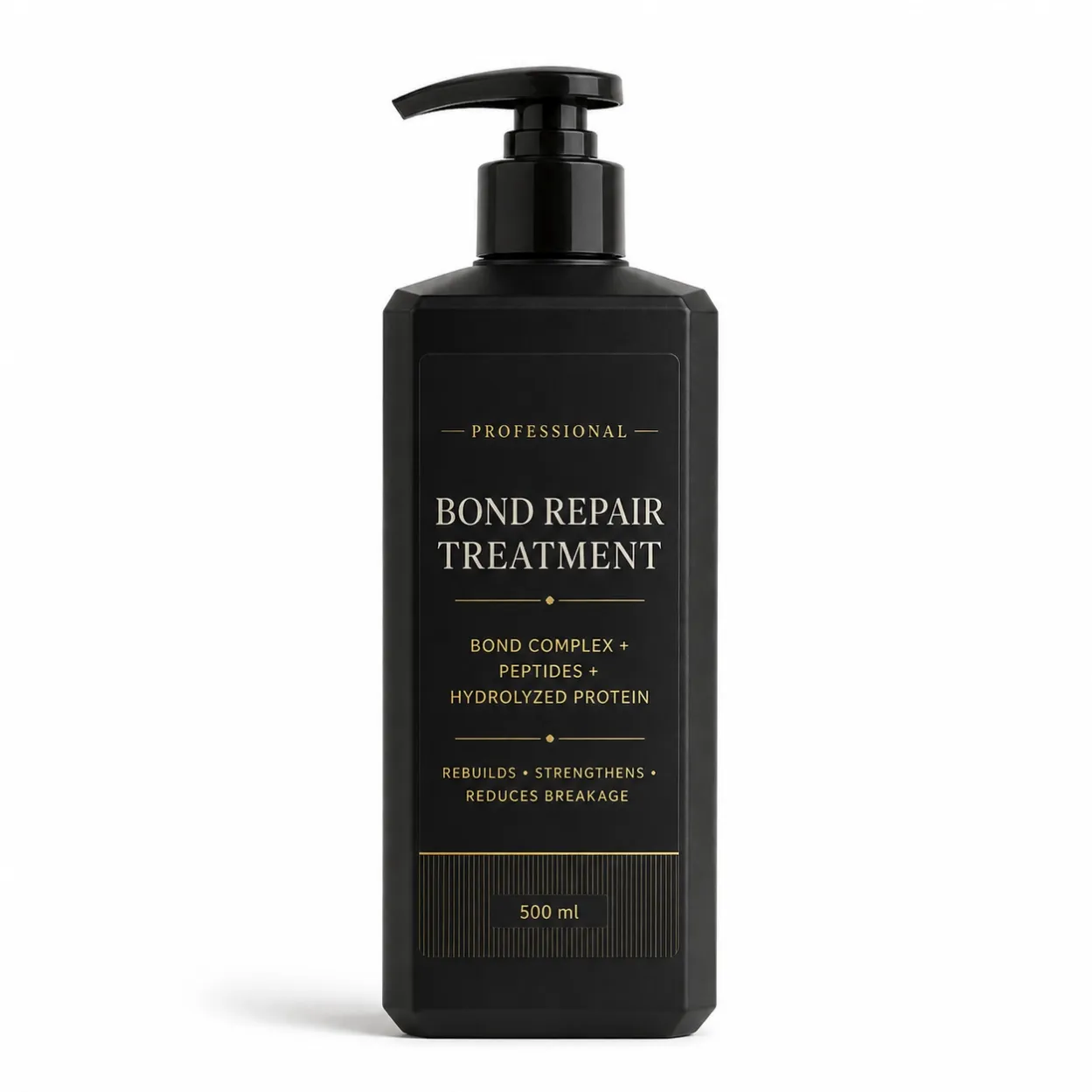
Bond-repair products can perform very differently on curly, coily, bleached, relaxed and repeatedly heat-styled hair because the fibers do not begin with the same geometry, porosity, lipid condition or mechanical history. An OEM buyer should not accept an “all hair types” statement as a test plan. Approve the formula only after comparing standardized tresses and real users across the hair conditions the brand intends to serve.
WHY “ALL HAIR TYPES” IS NOT A TEST METHOD
Hair type is only one variable. Two consumers with the same curl pattern may have different porosity, strand diameter, bleaching history, water exposure and styling habits. Those factors influence wet strength, friction, tangling, breakage and the amount of conditioning a formula can tolerate before hair feels coated.
For sourcing, define the test population in operational language: untreated wavy hair, high-porosity bleached curls, relaxed coils, color-treated straight hair or frequent hot-tool users. This gives the laboratory a target it can formulate and test against.
HOW DAMAGE PATTERNS DIFFER
CURL GEOMETRY AND MECHANICAL STRESS
Curved fibers have more points where stress can concentrate during combing, detangling and tight styling. Sebum also travels less evenly along highly curved fibers, so ends may feel dry even when the scalp is comfortable. A repair system for curls and coils therefore needs slip, controlled deposition and low residue—not merely a stronger marketing level of the same formula.
POROSITY IS NOT THE SAME AS CURL TYPE
Porosity describes how readily a fiber takes up and loses water and conditioning materials. Bleaching, permanent color, relaxers, UV exposure and repeated heat can increase cuticle disruption. High-porosity hair may show rapid initial softness yet lose the effect quickly, while low-porosity hair can become weighed down by rich polymers or oils.
CHEMICAL HISTORY CHANGES RESPONSE
Bleaching and oxidative color can weaken the cuticle and cortex through different mechanisms from relaxing or permanent waving. The same shampoo-mask-leave-in system may improve combing on one tress but leave another rigid, flat or rough after repeated cycles. Record chemical history separately from curl pattern when recruiting panelists.
WHY PROTEIN AND CONDITIONING BALANCE MATTERS
Hydrolyzed proteins, amino acids, cationic polymers, fatty alcohols, silicones and film formers can all support a repair story, but more is not automatically better. A formula that produces excellent first-use softness may accumulate after five uses. A highly substantive conditioner may help porous ends yet reduce volume on fine curls.
Ask the chemist to explain the role of each repair-support ingredient, expected deposition, use frequency and compatibility with the shampoo surfactant system. If the commercial claim refers to internal bond repair, request product-specific evidence for that mechanism rather than relying only on an ingredient brochure.
THREE TEST FORMATS
TEST 1: STANDARDIZED TRESS SCREENING
Use controlled tresses to compare untreated, bleached, relaxed or repeatedly heat-damaged hair. Keep product dose, washing time, water temperature, drying method and combing protocol consistent. Useful measurements include wet and dry combing force, breakage count, tensile behavior, friction, gloss and repeated-use residue.
TEST 2: SALON OR CONSUMER USE
A realistic panel reveals outcomes that instruments can miss: detangling time, curl clumping, shrinkage, softness on day two, scalp comfort, styling compatibility and whether users apply the recommended amount. Include the intended textures and chemical histories rather than recruiting a convenient general panel.
TEST 3: LAYERING AND ROUTINE COMPATIBILITY
Test the leave-in with common gels, mousses, oils, edge products and heat protectants. Look for flaking, pilling, tack, loss of hold, delayed drying and excess buildup. For protective styles, also evaluate scalp access, residue around braids and refresh performance.
WHAT TO MEASURE
A practical approval scorecard can combine objective and user-perception measures: wet detangling, dry combing, breakage after repeated cycles, softness, shine, curl definition, frizz in humidity, residue, volume retention and compatibility with styling products.
Do not collapse every result into one average. Report by hair condition. A strong result on bleached straight tresses does not prove equal performance on relaxed coils or low-porosity curls.
BUYER CHECKLIST BEFORE APPROVAL
Confirm the target hair conditions and markets. Compare at least two formula prototypes. Test the full routine at intended use levels. Review claims against the actual evidence. Check fragrance, color and viscosity stability in the chosen packaging. Run compatibility and microbiological testing. Finally, repeat the use test after several wash cycles to identify buildup or declining performance.
For line planning, buyers can compare current hair-care formats at https://www.junchunbeauty.com/products and review the related system article at https://www.junchunbeauty.com/posts/textured-hair-repair-system-oem-curl-care-edge-drops. A development brief can be sent through https://www.junchunbeauty.com/contact.
FAQ
CAN A BOND-REPAIR FORMULA WORK FOR EVERY CURL PATTERN?
It can be designed for broad use, but performance should be demonstrated across the intended porosity levels, strand diameters and chemical histories. One generic tress is not sufficient evidence.
SHOULD THE SHAMPOO, MASK AND LEAVE-IN USE THE SAME ACTIVE?
Not necessarily. The rinse-off and leave-on formats have different contact times, deposition behavior and sensory requirements. A coherent system can use complementary technologies rather than forcing one hero ingredient into every SKU.
HOW MANY WASH CYCLES SHOULD A BUYER REVIEW?
Include first-use results and repeated-use evaluation. The exact number depends on the claim and method, but multiple cycles help reveal accumulation, fading benefits and changes in curl behavior.
WHAT IS THE MOST IMPORTANT CLAIM RISK?
The largest risk is translating ingredient-level or laboratory evidence into a finished-product claim that was never tested. Claim wording should match the formula, protocol and population used.
SOURCES
Robbins, Chemical and Physical Behavior of Human Hair: https://link.springer.com/book/10.1007/978-3-642-25611-0
Hair cosmetics overview, International Journal of Trichology: https://pmc.ncbi.nlm.nih.gov/articles/PMC4387693/