Oct 18, 2026Material Notes
Bio-Based Conditioner OEM: What to Test Before Replacing an Ingredient
Evaluate a bio-based conditioning ingredient with controlled sample comparisons, formula compatibility checks and supply review before changing an OEM conditioner.
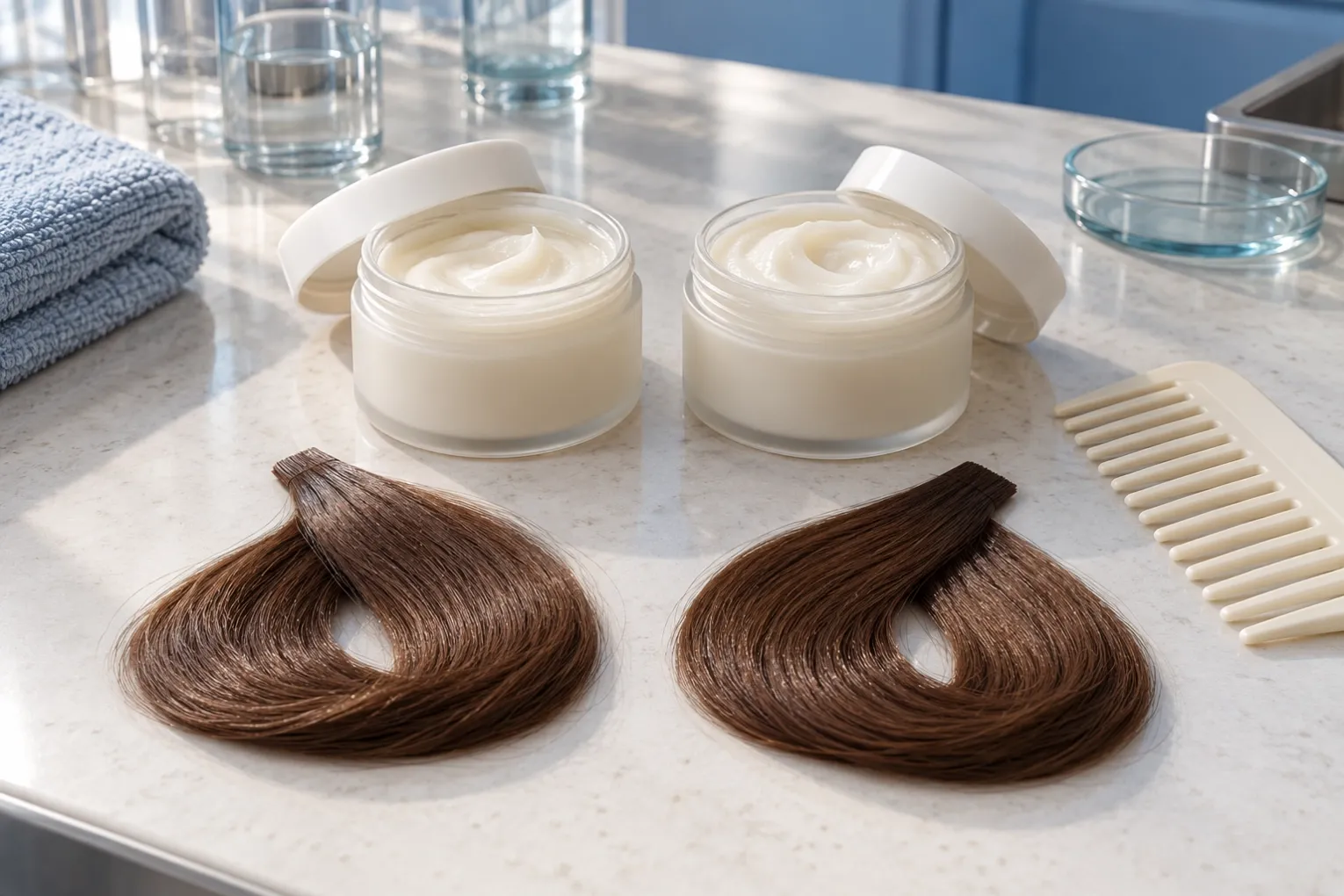
Treat a new conditioning ingredient as a development candidate, not a drop-in upgrade. Compare identified prototype and reference formulas under agreed use conditions, then review combing, after-feel, stability, preservation and packaging. Verify ingredient-level origin or biodegradability evidence separately from whole-product environmental claims.
What the current supplier signal establishes
WACKER’s public SEPAWA 2026 LinkedIn post promotes BELNEXT cosmetic functional ingredients and lists a 15 October presentation concerning a biotechnology-derived conditioning ingredient. Checked on 18 October 2026, the post’s exact publication date was not established. It is a supplier-development signal, not evidence of retail demand or a finished JunChun formula.
An ingredient announcement can justify a technical discussion. It cannot justify promising better conditioning, a universal substitution ratio or an environmental claim for an unevaluated finished product. Do not assume a supplier’s branded material is already purchased or available in JunChun production.
Define the replacement objective before requesting a sample
Choose the actual objective: sourcing resilience, a conditioning profile, a different sensory experience or a documented ingredient-origin preference. These are different tasks. A procurement change may not need a stronger consumer benefit claim.
Ask the ingredient supplier for technical identity, composition information, formulation conditions, specifications and evidence supporting the proposed material claims. Confirm what can be shared and under what conditions. Do not build a public story from an incomplete promotional slide.
Build a comparison that answers the development question
Identify the reference and prototype
Code the existing formula and each prototype. Record intentional changes. If viscosity, fragrance and conditioning system change together, a buyer may prefer one sample but cannot confidently attribute that preference to the new ingredient. Use a controlled series where feasible and document unavoidable differences.
Compare the relevant material content
Equal purchased-material percentages need not supply equal relevant content. The actual supplier composition and formulator’s assessment determine the comparison basis. This is a development consideration, not a one-for-one substitution instruction or a public formula recipe.
Use a relevant hair and rinse routine
Choose hair swatches or a suitable managed evaluation representative of the intended salon client. Keep wash history, application quantity, contact conditions and rinse method consistent. Review wet combing, rinse feel, dry handling and residue with an agreed method. Numerical claims need an appropriate defined study rather than an informal preference exercise.
Do not approve only the first-day texture
- Review intended manufacturing and handling conditions with the formulator.
- Plan stability and packaging-compatibility work appropriate to the actual product. Do not invent universal temperatures or durations from a marketing brief.
- Review microbiological and preservation requirements for the finished formula with the appropriate technical team.
- Recheck application performance after relevant storage observations rather than assuming initial sensory approval is final.
- Confirm material source, specifications, component identity and changes requiring reapproval before scale-up.
Keep material claims and product claims separate
Ingredient origin concerns the defined material and its supporting records. It does not automatically describe every ingredient in the conditioner.
Biodegradability concerns the specific test object, method and conditions supported by evidence. Do not transfer an ingredient-level statement to the entire formulation or packaging.
Conditioning performance concerns the actual finished formula and relevant comparison. Origin alone does not prove improved wet combing or a lighter dry feel. State the scope of any supported claim clearly.
Decide whether this is an upgrade or a distinct product
If the change preserves the role and buyer experience, it may be a controlled formula upgrade rather than a new SKU. Update the approved record and existing page once revised specifications and supported statements are clear. Do not create another link simply to add a fashionable raw-material term.
If a different use case emerges, compare its value against added testing, ingredient minimums and inventory. Neither an existing conditioner base nor a 100-piece stock-pack route confirms that a new ingredient can be used at that quantity.
JunChun can review the development question, existing conditioner or mask options, samples and packaging. Establish whether the request fits a mature formula, controlled adjustment or new development. Product claims should follow the approved finished formula.
Frequently asked questions
Can a new conditioning ingredient be substituted one-for-one?
Not without technical review. Understand composition, compatibility and the function it performs in the finished formula.
Does a bio-based ingredient make the whole conditioner sustainable?
That conclusion does not follow automatically. Define and substantiate the exact material or finished-product claim and its scope.
Can informal combing feedback support a quantified claim?
No. A numerical claim needs an appropriate defined method, comparison and evidence for the actual finished product.
Can this development automatically start at 100 pieces?
No. Ingredient sourcing, formula maturity, testing and packaging need separate confirmation before a low-quantity route can be offered.
Related products and company support
Butter Hair Mask — review an existing rich rinse-off direction before proposing a material change: https://www.junchunbeauty.com/products/private-label-butter-hair-mask-300ml-oem
Molecular Repair Mask — compare a separate existing conditioning project: https://www.junchunbeauty.com/products/private-label-molecular-repair-mask
Request a focused development review
Send the ingredient requirement, current product’s application target and evidence your brand needs. JunChun can assess an existing base, a controlled revision or new development. Selected mature formulas with compatible stock packaging may start at 100 pcs/SKU; packaging changes are reviewed from 500, subject to actual component and process minimums. A new material request is not automatically eligible.
Source and date
WACKER official LinkedIn SEPAWA 2026 supplier post; 15 October presentation listed; checked 18 October 2026, exact post-publication date unresolved: https://www.linkedin.com/posts/wacker_sepawa-2026-belnext-innovationpdf-activity-7511039540258816000-3ci5
The comparison framework is editorial guidance, not a completed JunChun trial, ingredient-inventory statement or substantiated environmental result. Cover depicts generic development samples.