Wig and Extension Care OEM: Test Human Hair and Synthetic Fibers Separately
Define wig and extension aftercare by fiber type, attachment method and routine. Use separate compatibility screens before approving a hair-care OEM formula.
Prepared 12 October 2026 · JunChun Beauty
Test wig and extension aftercare on the actual human hair or synthetic fiber sold by the brand, using its attachment method and recommended routine. Compare cleansing, detangling, residue and visual change separately for each substrate. A positive result on human-hair lengths does not establish compatibility with synthetic fibers, adhesive areas or every wig construction.
Why the substrate belongs in the purchasing brief
A 7 October 2026 Byrdie protective-style feature discussed hybrid styling and the importance of human-hair selection and continued care. It is a stylist and editorial signal, not proof of retail sales or universal compatibility. Read the dated feature.
Our recommendation for OEM procurement is to replace the broad word wig with an exact substrate description. Human-hair bundles, synthetic fibers, lace construction and bonded extensions cannot be assumed to behave identically.
Document the customer's actual hair product
Record fiber identity, processing history, coloring, density, curl pattern and construction. Ask the hair supplier for care instructions and any restrictions. If the fiber composition is unknown, mark compatibility as unresolved.
Identify the application area: lengths, ends, exposed scalp, lace or attachment zone. Do not recommend a length-conditioning formula on the scalp or adhesive area simply because the hair swatch feels softer.
Set up separate sample groups
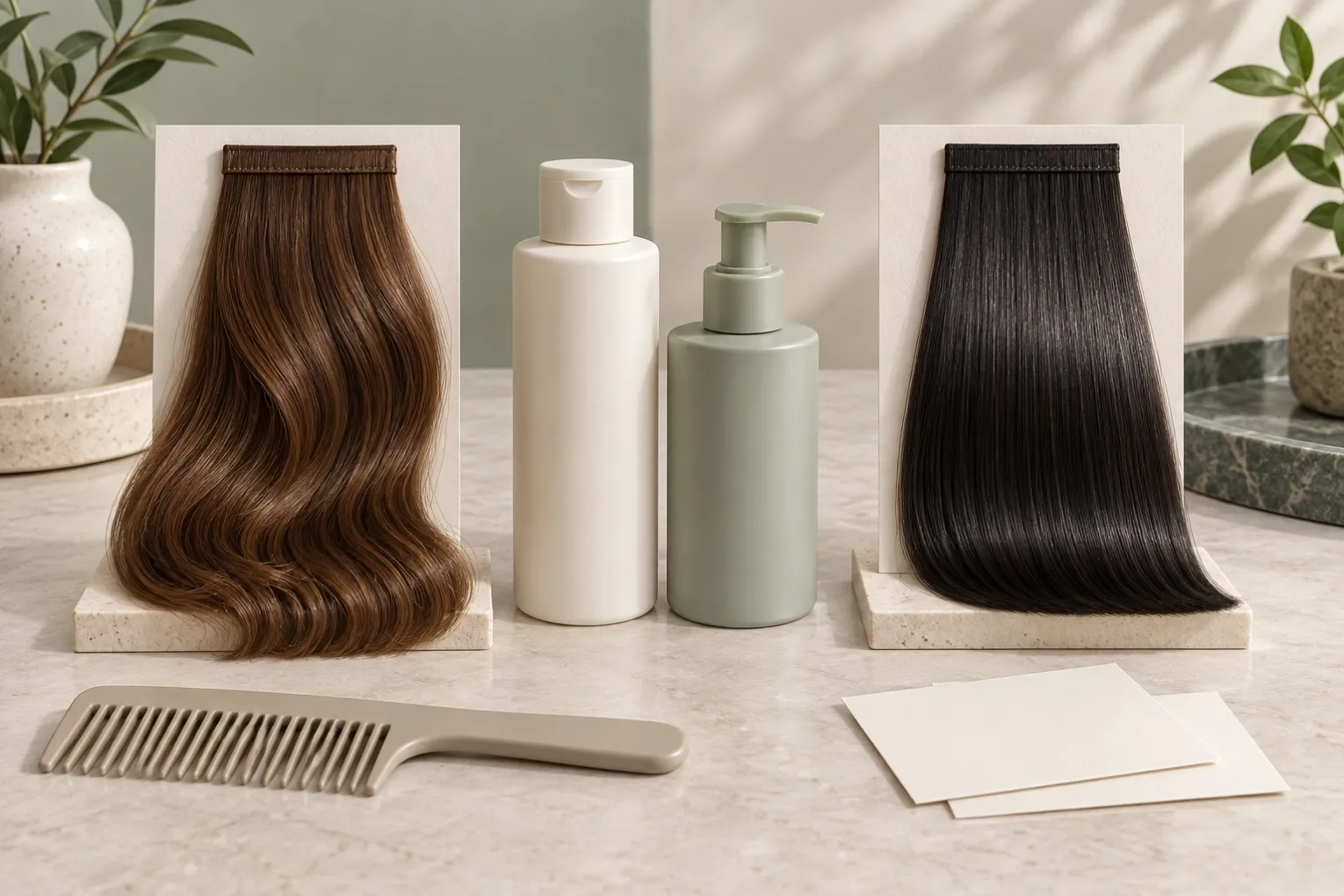
Human-hair swatches
Use representative bundles from the brand's actual supply chain. Include processed or colored hair if it is part of the offer. Record dose, cleansing frequency, wet and dry combing, hair grouping and finish under controlled conditions.
Synthetic-fiber swatches
Use the exact fiber and supplier instructions. Assess appearance, tangling, residue, color transfer and any visible deformation under the permitted routine. Do not assume that a human-hair heat protocol or a protein-repair story applies to synthetic material.
Attachments and construction
Use representative assemblies to screen how the intended application interacts with construction and attachments. Obtain the relevant supplier guidance. A swatch test on free lengths does not demonstrate safety for adhesive bonds or lace.
Compare the full routine rather than a single application
Document the starting wash, amount applied, contact time, rinsing and drying. Include a benchmark and an untreated or routine-only control where suitable. Repeat the agreed use sequence to observe accumulation and changes in manageability.
Separate wet detangling from dry softness. Record the combing method or measurement, not just a general impression that the product repairs hair. Keep photographs consistent in lighting, position and hair preparation.
Approve directions before adding performance claims
Define where the product goes, how much is used and whether it must be rinsed off. Specify any restrictions from the hair or attachment supplier. If heat protection is intended, obtain a suitable study for the tested substrate and conditions.
Avoid suitable for all wigs or repairs synthetic hair claims without an appropriate basis. Sensory smoothing does not prove structural repair, and no aftercare formula should be represented as preventing all breakage.
Choose a focused aftercare system
Begin with the clearest validated need. A cleanser and a lightweight length-conditioning product may serve different roles, but both require their own formula and compatibility evidence. Do not add overlapping sprays simply to create a larger set.
Ask the OEM supplier to identify the mature-formula or custom-development route, available pack, sample plan, supporting documents and applicable MOQ. The final approval should link the formulation, tested substrate, directions and packaging version.
Frequently asked questions
Can one formula serve human-hair and synthetic wigs?
Possibly, but compatibility must be evaluated separately on the actual materials and recommended routines.
Can a leave-in milk be used on adhesive bonds?
Do not assume so. Confirm application restrictions with the attachment supplier and assess the relevant assembly.
Does softer hair after one use prove repair?
No. Softness, detangling and structural-repair endpoints are different; match wording to the actual evidence.
Can a small aftercare pilot be quoted?
Yes, the route can be reviewed. Selected mature formulas and stock packaging may allow lower quantities; exact eligibility and MOQ must be confirmed.
Related products and OEM capabilities
Discuss your project
Send a wig or extension aftercare brief with fiber identity, processing history, attachment type, supplier care instructions, market and expected order volume.
Sources and evidence notes
- Byrdie: Fall 2026 protective styles — Published 7 October 2026; checked 12 October 2026. Stylist/editorial observations with Instagram references, not quantified demand.