Aug 1, 2026
How African Beauty Distributors Can Build a Complete Private Label Portfolio
A practical guide for African cosmetics importers and distributors planning a coordinated private label portfolio across textured hair care, body care, melanin skincare and men's grooming.
HOW AFRICAN BEAUTY DISTRIBUTORS CAN BUILD A COMPLETE PRIVATE LABEL PORTFOLIO
For many beauty importers and distributors, the biggest sourcing mistake is not choosing the wrong shampoo or face serum. It is launching too many disconnected products that do not create a clear reason for customers to buy again.
A stronger private label strategy starts with routines. When shampoo leads naturally to conditioner, scalp oil and leave-in care, the distributor is no longer selling one bottle. The distributor is building repeat purchases, larger baskets and a brand that looks intentional.
This matters across African beauty markets, but the right portfolio is not identical in every country. A Nigerian wholesaler, a Kenyan salon supplier, a South African e-commerce brand and a French-speaking West African distributor may serve different price points, climates, retail channels and customer expectations. The product architecture should therefore be coordinated but flexible.
START WITH CUSTOMER PROBLEMS, NOT A LARGE CATALOG
A catalog can contain hundreds of products and still fail to answer the buyer’s most important question: which products belong together for my market?
For textured-hair customers, the common commercial needs include moisture, detangling, curl definition, scalp freshness, protective-style maintenance and reduced breakage appearance. For body care, dry-skin moisturization, sensorial exfoliation, glow and fragrance layering can create strong routines. For melanin-rich facial skincare, buyers increasingly need credible language around visible dark spots, uneven-looking tone, barrier support and sunscreen without an obvious white cast.
A focused first launch might contain only three to five products from one routine. A larger distributor can combine several lines under one brand architecture while keeping each collection visually distinct.
BUILD THE PORTFOLIO IN FOUR COMMERCIAL PILLARS
- Textured Hair and Scalp Care
A complete textured-hair offer should cover cleansing, conditioning, deep treatment, leave-in moisture, styling and scalp care. The exact assortment depends on the sales channel.
Salon and professional buyers may prioritize larger shampoo, conditioner and treatment sizes. Retail and e-commerce buyers often need hero products that are easy to explain in short videos, such as curl cream, edge control, braid mousse, rosemary scalp mist or nourishing root oil.
Ingredient stories such as shea, baobab, black castor oil, rosemary and Batana can help customers understand the product concept quickly. However, the final sales claims must still match the formula and supporting evidence.
- Body Care and Glow Rituals
Body wash alone creates limited differentiation. A coordinated ritual can include body wash, scrub, lotion, body butter and body oil. This gives the importer several price levels and lets retailers build bundles.
African shea and baobab support a nourishing positioning. Turmeric and vitamin C can support a radiance and even-tone concept without using harsh bleaching language. Coffee and cocoa create a strong sensorial story for exfoliation, massage and bronze-looking glow.
The fragrance profile is commercially important. Warm gourmand, fresh botanical, fruity and luxury perfume-inspired options can be developed for different markets and retail channels.
- Melanin-Friendly Skincare and Sun-Glow Products
Melanin skincare should not be treated as ordinary skincare with a different model on the packaging. The product language, texture, sunscreen finish and concerns being addressed all matter.
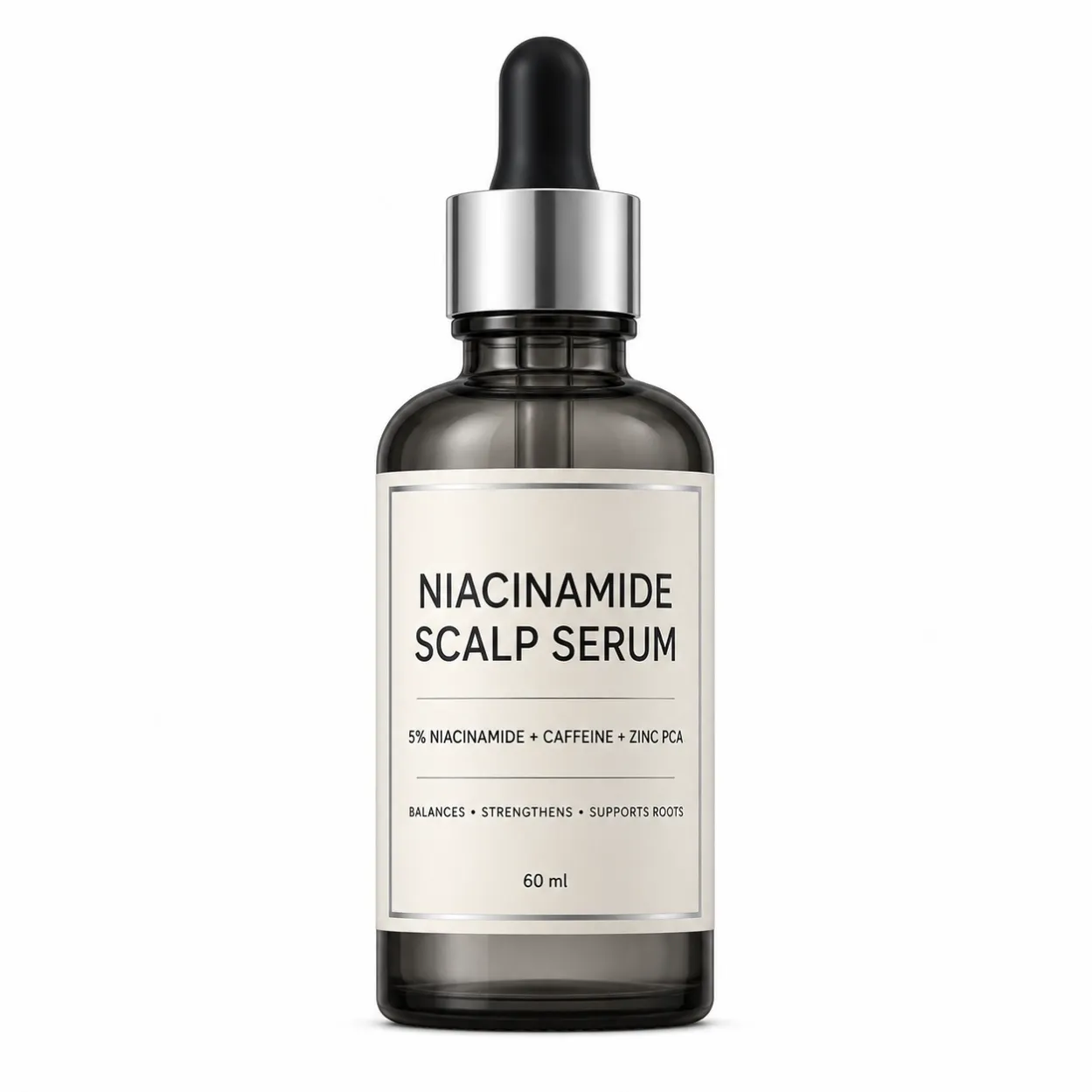
A practical routine may include a gentle cleanser, toner, niacinamide serum, vitamin C serum, dark-spot care, barrier moisturizer and tested sunscreen. A separate sun-glow collection can include tanning oil, bronze shimmer body oil and after-sun gel.
These products must be described accurately. Tanning oil is not automatically sunscreen. SPF, water resistance and sun-protection claims require testing on the final formula.
- Men’s Grooming
Men’s grooming can extend the distributor’s reach without requiring a completely separate supplier. A coordinated range may include scalp shampoo, conditioner, 3-in-1 wash, beard oil, beard balm, styling clay, aftershave balm and daily face moisturizer.
For wholesale and retail buyers, the commercial advantage is clear: hair, beard, body and face products can be sold individually, bundled as gifts or supplied to barbershops.
CHOOSE THE RIGHT PRIVATE LABEL DEVELOPMENT LEVEL
Not every buyer needs a fully custom formula at the beginning.
Market-ready private label products are usually the fastest route for testing. The buyer selects an existing formula and available packaging, then customizes the logo and label.
Semi-custom development can adjust elements such as fragrance, color, texture or selected ingredients, subject to formula stability and testing.
Full custom development is most suitable when a brand has a defined product brief, larger commercial plan and sufficient time for sampling, stability review, packaging compatibility and destination-market compliance.
For selected formulas and stock packaging, a trial order may begin from 100 pieces per SKU. MOQ changes when the buyer requires custom bottles, special decoration, new molds, printed cartons or a fully custom formula.
PLAN THE LAUNCH BY SALES CHANNEL
Distributors should decide where the products will sell before finalizing the range.
For salons, prioritize professional performance, backbar sizes and retail take-home products. For beauty stores, create a clear good-better-best price ladder. For e-commerce and social commerce, choose products with a visible routine, simple benefits and strong video demonstration potential. For supermarkets and pharmacies, focus on label clarity, consistent supply and documentation.
In Nigeria and Ghana, distributors may need strong textured-hair, scalp and body-care stories with careful price planning. In Kenya, Tanzania and Uganda, a focused multi-use range may help reduce inventory complexity. South African brands may require stronger retail differentiation and channel-specific packaging. Francophone West African markets may need French labels and distributor-ready communication materials.
These are starting points, not fixed rules. The final selection should follow the buyer’s channel, customer profile, competitive set and target retail price.
CONTROL RISK BEFORE SCALING
A low MOQ is useful only when the first order is structured properly. Too many fragrances, bottle shapes and formulas can still create unnecessary cost and slow decisions.
A lower-risk launch usually follows this sequence:
• Select one clear customer problem
• Choose one three-to-five-product routine
• Use stock packaging where suitable
• Confirm target retail and wholesale prices early
• Approve formula, fragrance and artwork before production
• Prepare claims and label language for the destination market
• Test sell-through before expanding into the next collection
Once the first routine performs, the distributor can add complementary products without changing the brand story.
WORKING WITH ONE OEM/ODM PARTNER ACROSS THE PORTFOLIO
Using one coordinated manufacturer for hair care, body care, skincare and men’s grooming can simplify formula communication, packaging selection, artwork review, production planning and export documentation.
Guangzhou Junchun Cosmetic Limited supports African beauty importers, distributors, agents, salons and private label brands with market-ready products, semi-custom options and custom development. Selected stock formula and packaging combinations may start from 100 pieces per SKU, with typical private label production around 14–20 working days after approvals.
Buyers can request English, French, Arabic or customized multilingual labels. Packaging, fragrance, texture and product combinations can be planned around the target country, sales channel and retail positioning.
FREQUENTLY ASKED QUESTIONS
Can a new brand begin with only one collection?
Yes. A focused hair, body or skincare routine is usually easier to position and test than a broad disconnected catalog.
Can different collections use one brand?
Yes. Consistent brand architecture can connect the portfolio while colors, ingredients and model direction distinguish each collection.
Is 100 pieces always available?
No. It applies only to selected ready formulas and stock packaging. Custom formula, packaging decoration and testing can require a higher MOQ.
Can sunscreen be labeled SPF 50 immediately?
Only when the final formula has the required supporting tests and the label complies with the destination market.
Explore the full 11-line private label African beauty collectionhttps://www.junchunbeauty.com/products/private-label-african-hair-body-melanin-skincare-collection