Point-Repair Hair Styling OEM: Test Hold, Flaking and Applicator Control
Evaluate targeted flyaway styling by applicator dose, localized hold, restyling, visible residue and brush compatibility before OEM approval.
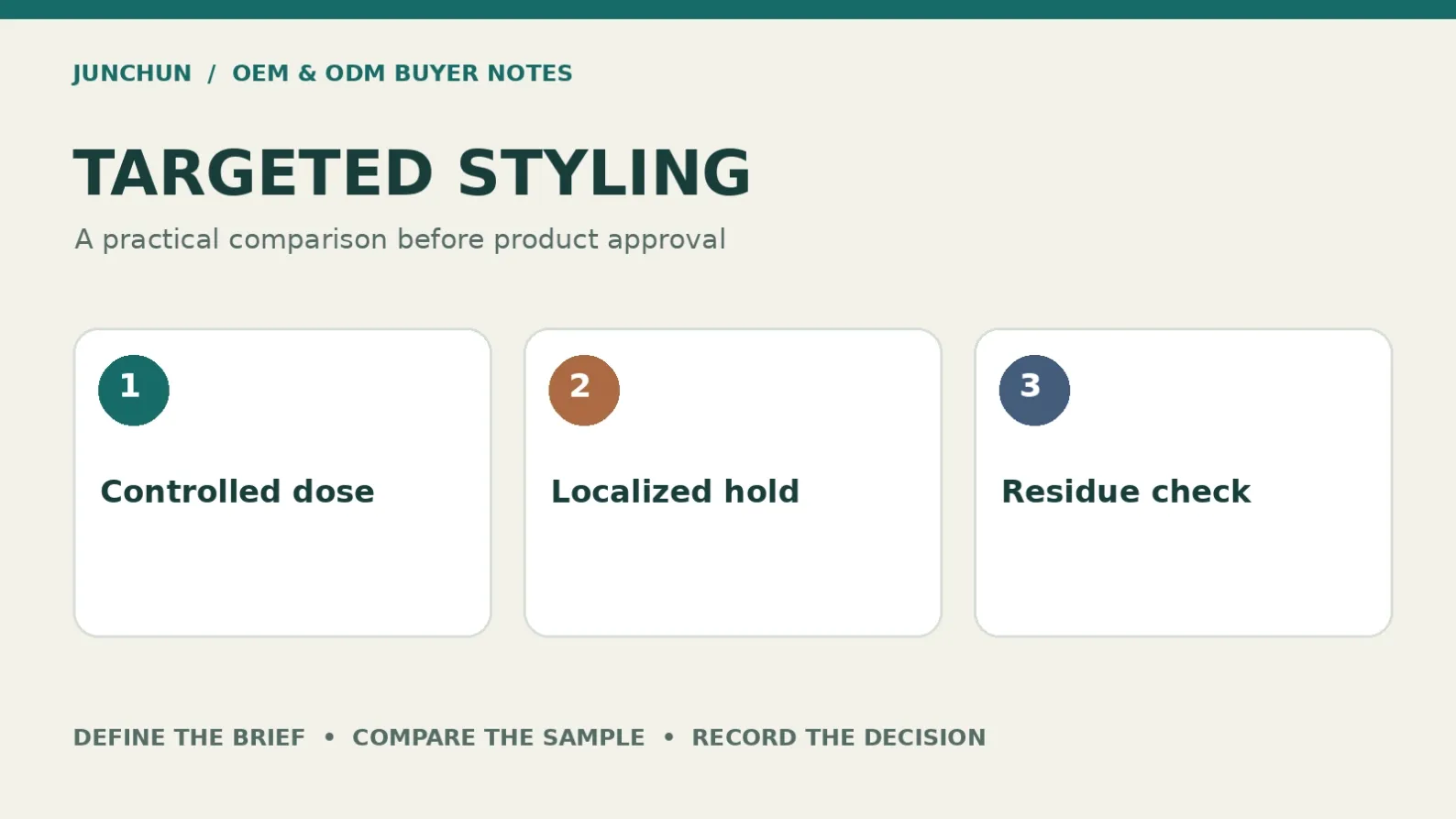
For targeted flyaway styling, test the applicator and formula as one system. The key decision is whether a small, repeatable dose controls the intended area without leaving obvious residue or disturbing the surrounding style.
Define what point repair means
Here, point repair means localized cosmetic styling of flyaways, edges or a parting. It does not mean repairing hair biology or restoring a damaged fiber. Define the target area, hair texture, style and desired finish. A product for loose flyaways may require a different hold and brush shape from an edge-styling product. Use names and demonstration images that make the styling role clear.
Choose a controlled comparison
Prepare comparable hair tresses or appropriately screened users, consistent with the supplier’s directions. Standardize starting style, product amount and application passes. Compare with an untreated control where appropriate. Record immediate placement, finish after drying and behavior after normal movement. If humidity resistance is part of the brief, ask the technical team to define controlled conditions and an assessment method rather than relying on an outdoor photograph.
Look for failures during restyling
Assess a second application and gentle restyling under the intended directions. Photograph visible residue against both light and dark backgrounds. Record flaking, clumping, hard spots, tack and transfer separately from hold. If a product looks good immediately but builds up during repeat use, decide whether the formula, dose instruction or application tool needs revision. Avoid averaging an unacceptable residue result into an overall favorable score.
Test the brush after repeated use
Evaluate pickup, output consistency, wiping at the neck, closure contamination and applicator recovery after storage. Confirm that the component materials are compatible with the final formula and that cleaning instructions are appropriate. Use a separate approach for shared salon demonstrations to prevent cross-contamination. A mascara-like pack appearance does not establish suitability for eyelashes, eyebrows or eye-area use; those would require a separately assessed product brief.
Turn observations into an OEM specification
Identify formula, fragrance and component versions. Define the acceptable styling finish and any mandatory residue or dispensing limits through the agreed assessment. Request an eligible existing route and a separate applicator-development route. Custom brushes or printed components may have supplier minimums above a basic stock-pack trial. Send target use, market, quantity, pack and evidence needs for a project review.
Buyer FAQ
Can this be positioned as hair damage repair?
Only with evidence for the exact claim. This brief concerns localized styling, so use clear flyaway-control language.
Is stronger hold always better?
No. Match hold with the target finish, flexibility, residue and ease of restyling.
Can a standard brush fit any gel?
No. Review pickup, wiping, flow and material compatibility using the final formula.
References and project links
Send your target market, sales channel, product requirements, packaging and quantity to info@junchunbeauty.com for a project-specific sample and quotation review.