Hair Mask OEM for Fine and Coarse Hair: Use Separate Approval Panels
Choose hair mask OEM samples for fine and coarse hair using separate approval panels. Compare finish, dose and rinse effort before adding another SKU.
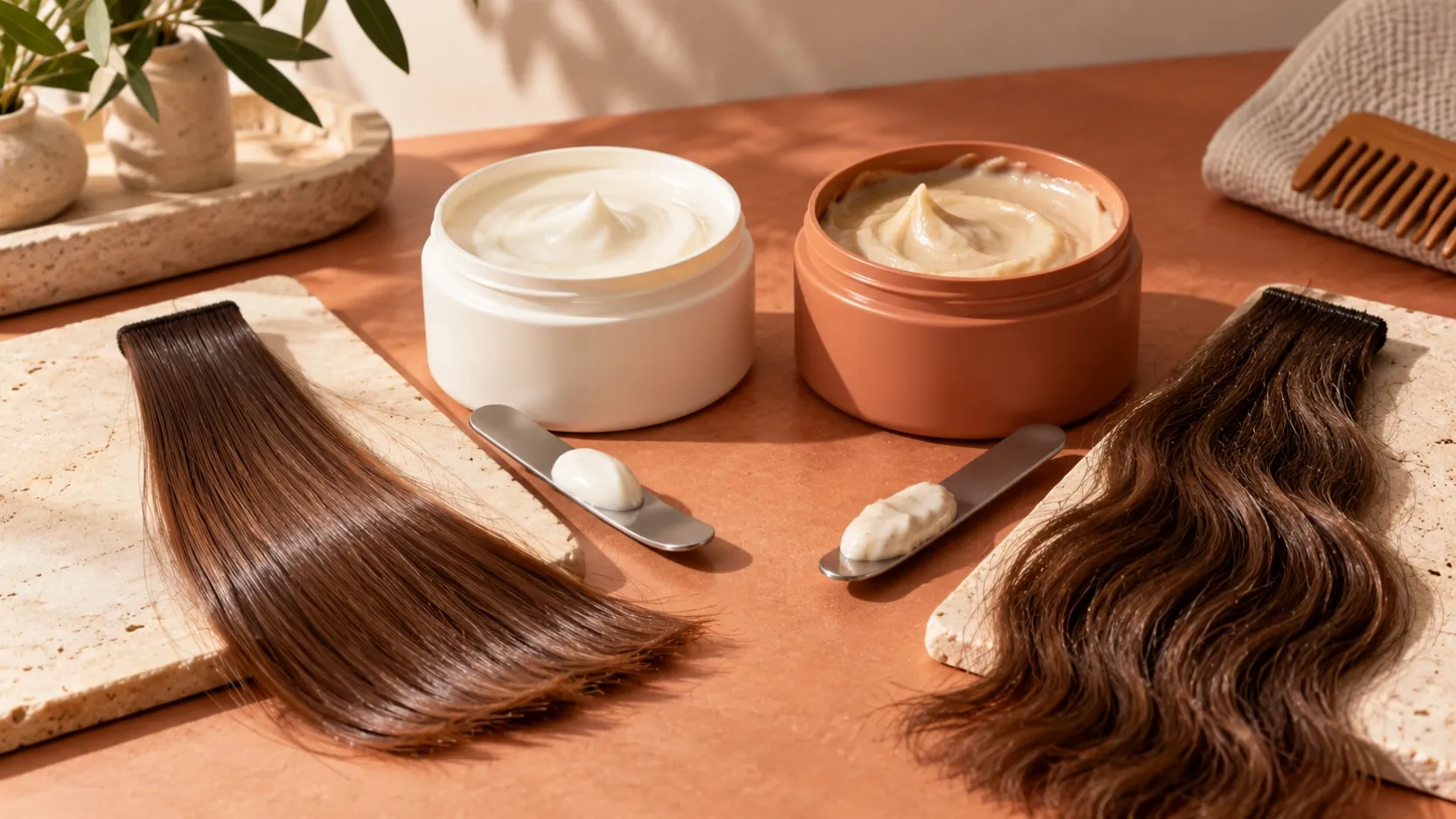
Assess fine and coarse hair in separate approval groups before averaging results or choosing a single mask. Record curl pattern and treatment history separately, then compare dose, rinse effort and dry finish for the actual target users.
A recent treatment signal
Soulstice's September 1, 2026 launch included an intensive mask within a broader hair-care routine. This is an example of treatment assortment planning, not evidence that one OEM mask will suit every hair group. Source: official launch announcement.
Buyer inference: a broad positioning statement creates a broader approval question. A pooled average may hide a result that matters to one of the distributor's customer groups.
Define the groups before choosing samples
Use a documented fiber-diameter classification for “fine” and “coarse,” agreed with the testing provider. Do not use curl pattern as a shortcut for diameter. In the project record, treat diameter, curl pattern, chemical history and current routine as separate fields.
The aim is useful segmentation, not an unnecessarily large study. Begin with the groups that represent the commercial brief. Expand the assessment only when the intended claim or account requirement calls for it.
A working panel record
| Field | Why it belongs in the brief |
|---|---|
| Fiber diameter group | Defines the fine/coarse comparison |
| Curl or wave pattern | Records another relevant characteristic |
| Treatment history | Keeps processed and untreated substrates identifiable |
| Current product routine | Defines the baseline experience |
| Hair length and density | Helps interpret application and dose feedback |
No panel size or numerical cut-off is prescribed here. The testing provider should justify those decisions for the project.
Keep the baseline comparison equal
Use one agreed wash procedure, contact time and rinse method. Compare candidates with the same routine benchmark within each group. Randomize sample order or allocation where appropriate and blind sample identity when practical.
If directions deliberately differ by hair group, assess those instructions as a second stage. Do not introduce a different dose halfway through the primary comparison without documenting it.
Evaluate more than immediate wet feel. The buyer needs to know whether the dry finish, application effort and rinse time suit the intended consumer or salon service.
Score outcomes that inform a real decision
Wet handling
Record distribution, detangling experience and rinsing effort using an agreed scorecard. Instrument measurements, where required, should be planned separately from subjective comments.
Dry finish
Assess the finish under a consistent drying routine. Record unwanted coating, flat-looking appearance or insufficient conditioning as observations rather than assumed mechanisms.
Practical use
Ask whether the recommended quantity is easy to remove from the jar or dispense from a tube. A useful dose instruction should be understandable without specialized equipment.
These are proposed assessment directions. They do not establish structural repair, reduced breakage or a universal suitability claim.
Decide whether a second SKU earns its place
One formula may be a reasonable choice if both groups meet essential criteria with practical directions. Two textures may be justified if each delivers a meaningful improvement for a distinct target and the range can support the added inventory.
A second SKU should solve a documented need. It also adds sampling, packaging, artwork and demand-planning work. Ask for an itemized comparison of one-formula and two-formula routes before deciding.
If results conflict, retain the group-level data. Rewriting the claim or narrowing the audience can be more appropriate than stretching a pooled average into broad suitability.
FAQ
Does curly hair automatically belong in the coarse group?
No. Record curl pattern and fiber diameter separately.
Can one mask work for both groups?
Possibly. Approve it against essential outcomes in each intended group and test practical directions.
Does a pleasant panel result prove a repair claim?
No. Sensory acceptance and specific performance claims require different evidence.
Related capabilities and Contact
Review the molecular repair-mask development concept or coordinated fruity hair-care range. Confirm the target finish and required evidence rather than relying on a product name.
Contact Junchun Beauty with the two target groups, current benchmark, pack sizes, quantity and channel. Request paired sample options and a group-level approval plan.